Marie Therese Landry Patureau

You have to be careful when you talk about my father’s maternal grandmother.  Not that she’ll get mad at you or anything, it’s just that the name Marie Therese is very popular in our family.  Not only did my great grandmother have the name, but so did my dad’s sister (Aunt Marie), one of his first cousins (Sis – thanks again for providing this new and improved photo of your namesake!), and one of my second cousins (Therese).  And there are a few other more distant cousins with the same name too.

Marie Therese Landry circa 1888.  She was the mother of my Mee Maw.

This Marie Therese was born in 1868 to Trasimond Landry and his wife Marie Amelie “Belite” Bujol Landry in Brusly, Louisiana.  She was the first child born to that union.  According to the book “The Tirailleurs”, Trasimond and Belite began courting during the Civil War.  I guess you can call it courting even though he was fighting in a war.  They saw each other on an occasional leave and then corresponded by letters.  Belite was one of four beautiful daughters of widow Bujol, and Trasimond was particularly partial to her tender charms.

Trasimond and Belite were married after the war on Nov. 30, 1867.  Ten months later came along our little Marie Therese.  Over the next eight years two sisters and two brothers joined her.  They lived on a farm at first, but then Trasimond gave up farming and became a teacher and took on some minor roles in politics.  He died when Marie Therese was only eleven years old, so I’m sure she helped her mother out with the younger children.  Belite married Magloire Babin in 1880, which led to two younger half-sisters for Marie Therese.  I don’t have much more information about the next few years.

I do know that Marie Therese married Vincent Maximilian Patureau on Oct. 10, 1888, in Brusly, but afterwards they were living in Plaquemine on Patureau Lane.  I don’t know how they met, but it was probably through the family.  They were cousins after all!  Hey, if her parents did it, why not her?  It was the custom back then.  Ten months after they were married, Marie Therese and Max welcomed their first child into the world.  They went on to have many more children – and lose a few – until our Marie Therese died on October 4, 1909, at the young age of 41.  The anniversary is just a few days off.  So think about her on her anniversary, whether your name is Marie Therese or not!

Hein/Hine – My German Roots

When I was growing up I always thought my mom’s side of the the family was German and English.  For some reason I always assumed that the German came from the Bucklin line of the family.  When I was in high school, I took on the task of reading (and recording on cassette tape) my great grandfather Louis Charles Bucklin’s journal from 1893.  This was for the benefit of my grandfather Fred Bucklin because he had vision problems.  (Note from Sept. 21, 2019: For the first time I’m thinking this might have also been a way my grandfather tried to get me interested in his own family history.  The journal was his father’s and it had been around all of his life.)

I remember coming across an entry where he talks about a man from Ohio (with two of the “finest daughters“) who asks him if he was German.  Lou tells him “No, I am an Irishman.”  When I read that, I thought that he was lying to the man from Ohio to put him off because he was not interested.  I just knew that he was German and not Irish.  But I was wrong.  His mother was a full blooded Irish woman with the last name of McGrath and the Bucklins are of English descent.

But Lou’s wife Addie Hine’s family line (my Grandpa Fred’s mother Addie Hine), on the other hand, is German.  I’ve come across some information recently that makes me much more certain of the line that goes back to Germany.  Since I don’t have a photo of the Hein family that immigrated from Germany to the US (it was in 1753 after all), I am posting a photo of the Hine family just before they immigrated to Louisiana in 1894.

Hine family in 1892 in Boone County, Indiana. From left to right is Rowe, Jim, George, Ollie, Addie, Susan, Bert, and Lonnie. (Could the dog be Sammy?)

This is the George Henry Hine family in Boone County, Indiana, in 1892.  As you can see, it is a very rustic existence with a log cabin.  All of the family was born in Indiana.  But they were born in Noblesville, Indiana, which is in the neighboring county of Hamilton.  I know that George’s wife Susan Stanbrough Hine’s family was from the Noblesville area.  But I just recently found that George had some family members living in Boone County.

In a previous post I talked about how I discovered that George’s mom Malina’s maiden name was Cox.  Now I’ve discovered that Malina’s father’s name was Benjamin Cox.  I found a will for him that is from Boone County at his death in 1877.  It lists a daughter by the name of Maline Cox Hines.  Don’t be concerned with the spelling, like I said before, they did not have the Myrtle Phenice spelling gene!  His history shows him as being from North Carolina, which is where Malina was born.  It all fits together nicely.  It also might explain why the family moved from Hamilton County to Boone County.

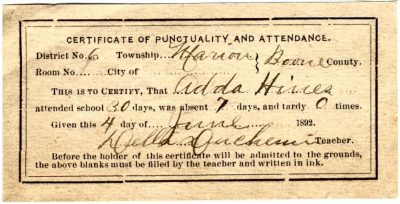
George was born in Hamilton county in 1846 (and died in 1919) and showed up with the family there through the 1870 census.  Then the family shows up in Boone County in the 1880 census.  They stayed there until they moved to Louisiana in 1894.  In the meantime the kids were going to school, as can be evidenced by this certificate that Addie received for attendance that was dated June 4, 1892.

So let me take you back to Germany along the Hine line.  George’s father was John Peter Hine (1819-1900).  He was the first in this line to use the more English spelling of Hine rather than the German spelling of Hein.  It looks like the extended family did likewise.  Some of the later generations also changed the spelling to Hines, but our family line stuck with Hine.  John Peter was born in Bethabara, North Carolina, and moved to Indiana in 1841.

John Peter’s father was Peter Hein.  He was born in 1794 in Bethabara, North Carolina, and lived his whole life in Forsyth County, North Carolina.  He died a few months after the birth of John Peter.  (Actually he died before the birth of John Peter.  I should pay a little closer attention to the dates! For more information, read Becoming a Father Posthumously) This explains why John Peter was his only child.  All of the other generations had at least five children.

Peter’s father was Johannes or John Hein (1749-1806). He immigrated with his father Johann Jacob Hein (1713-1795) in October of 1753 from Germany.  They were both born in Dillenburg, Germany, and when they immigrated, they originally settled in Broad Bay, Maine.  Then in 1770 they moved with a group of 300 people to a Moravian settlement in what is now Forsyth County, North Carolina.

John Hein was the son of Jacob’s first wife who died in Germany.  Jacob remarried in 1752 and immigrated with his new wife and his children in 1753.  They were part of the Moravian church.  The church had many missions and settlements in the New World.  One of those settlements was Bethabara, which is where the Hein family settled in 1770.  Johann Jacob Hein died in 1795 and is buried in the Friedland Moravian God’s Acre.  His legacy carries on.

Music in the Family Series Part VII – Bob Landry’s Life of Music

Surely you couldn’t think that I had finished my series of Music in the Family without shining the spotlight on my dad?  His whole life was practically about music.  His career, his hobbies, and interests were mostly centered around music.  It was the only “other woman” that my mom had to worry about!  It took more time away from her than she liked at times.

My dad was involved in choral music, band music, and barbershop singing.  If anybody was interested in music and had a question or needed help, Bob Landry was willing to help.  It didn’t matter about your heritage, race, sex, or social status, he gave his time freely, which sometimes bothered my mom.  At times she struggled to makes ends meet on the salary of a band teacher and some of those people he was helping could afford to be paying for private lessons!  But my dad couldn’t be bothered.  Music was the important thing!

Newspaper article circa Aug. 1963

I just came across this article from around August of 1963 when I was looking for photos for this post.  I didn’t even know it existed, but it has a lot of information in it that I was wanting to know.  It tells about the history of my dad’s musical experiences just prior to beginning work in the band and choral programs in Jefferson Davis Parish.  He taught for two years in Elton and then moved on to Jennings at Northside Junior High School where he would make his mark on so many people in Jennings through the years.

The article indicates that Daddy began learning band instruments his freshman year at Landry Memorial High School in Lake Charles under the direction of Eddie See.  This was around 1942 and the two of them would have a long history together.  (Such as creating the McNeese fight song “Jolie Blon”)  During high school my dad learned many various instruments and even taught other students during his senior year.

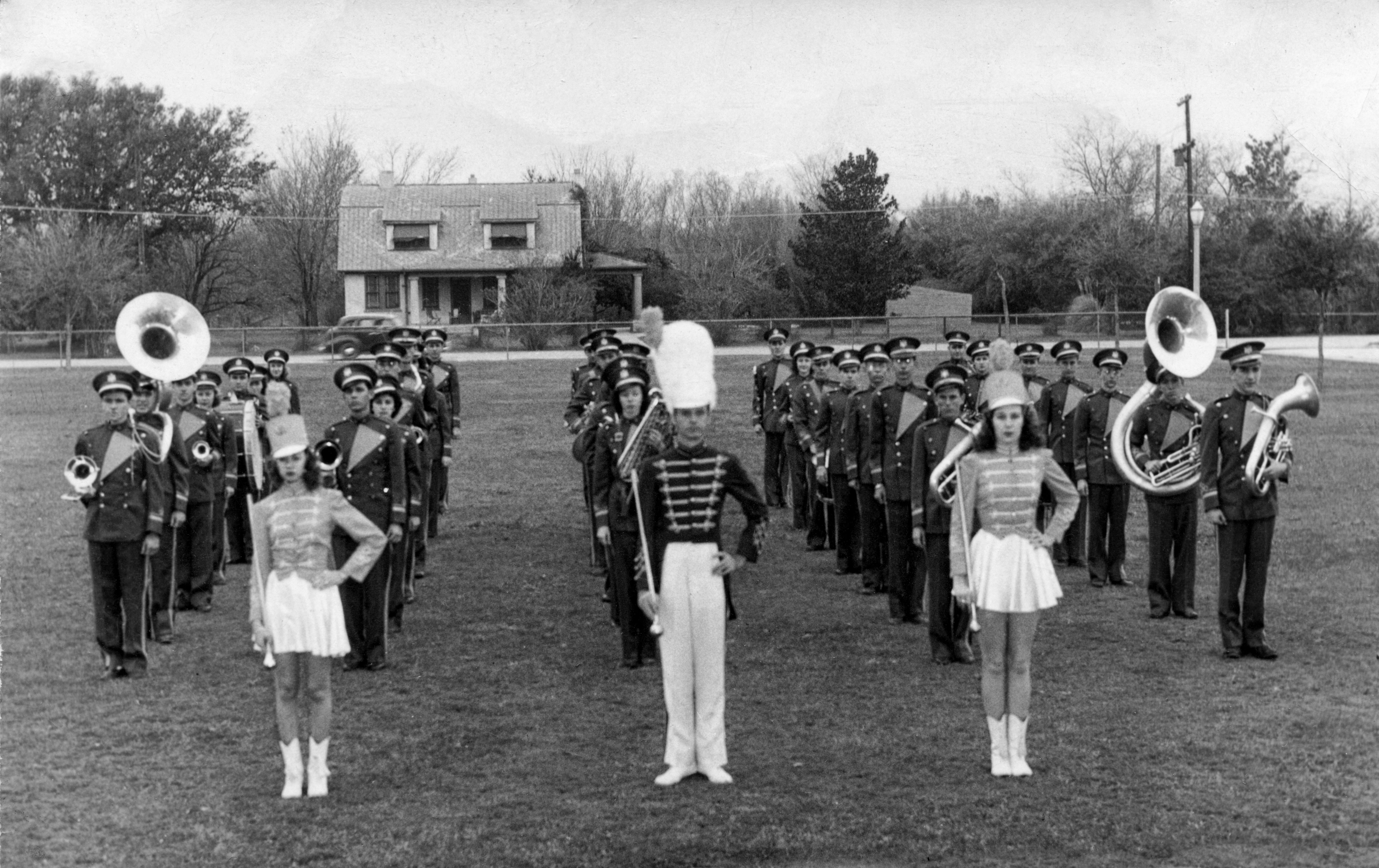
McNeese band circa 1947

After high school he went to McNeese and was in the band there.  This is a photo of the McNeese band in 1947.  Bob – or Pluto as he was known by many back then – can be seen on the far right of the photo with a baritone.

I know that about this same time is when my dad began to get involved with barbershop singing.  He was a member of the Society for the Preservation and Encouragement of Barber Shop Quartet Singing in America or SPEBSQSA for short.  Growing up in the Landry household meant that you knew these letters and what they stood for!

Bob and Betty Landry played baritone for McNeese. They can be seen in the upper left of the photo. Bob on the left, Betty in the middle, and third baritone on the right.

Daddy’s college career included stints at Lafayette and Baton Rouge.  It was in Baton Rouge that he met my mom when she visited the campus for a solo and ensemble festival in 1950.  He returned to McNeese when it became a four year school and my mom started college that same year.  My dad was the first student at McNeese to play a senior recital in 1951.  This photo is a photo I scanned from the McNeese yearbook that shows the band performing in the auditorium.  You can see mom and dad in the upper left part of the photo.  Who would have guessed that they’d be making music together for 65 more years after that?

Daddy was in the first graduating class from McNeese in 1952 and then went on to join the Air Force. While there, he was in the Air Force band. Shortly after that he and my mom were married and started a family. Jodie was born in California and Rob was born in Albuquerque while he was in the Air Force. They moved back to Lake Charles where Karen, Al, Van (me), and Jamie were born. Daddy continued his educational pursuits and earned his Master’s Degree from LSU in 1962

1966 summer band program at Northside

As I said earlier, he began teaching at Northside in 1965. I have so many memories from those early years of the band program.  He had the summer band program in the old Northside gym.  It was before there was air conditioning in the building, so it could get rather warm in there with all those little bodies running around and singing with their warm little breaths!  They had classrooms on the side of the gym and we would meet in there to sing and play as the big fan in front of the classroom would swing back and forth.  We young kids would play the ukulele and the older ones would graduate to guitar and bass.  And oh the songs we’d sing:  This Land is Your Land, Five Foot Two, Down in the Valley, Red Sails in the Sunset, The Ballad of the Green Beret, Cuando Calienta el Sol, Mobile, and many many more. (One of those songs was Swinging Shepherd Blues with my sister Jodie and her friend Stella Duvall playing a flute duet.)

Barbershop quartet The Crawdads – Bob Landry, Oran Richard, Steve Coco, and Nathan Avant circa 1968

During this time Daddy was also continuing his involvement with barbershop.  He would always have a barbershop quartet, plus he would work with the chorus in Lafayette or Jennings.  This photo is from around 1968 and includes Bob Landry, Oran Richard, Steve Coco, and Nathan Avant.  This group was called the Crawdads, and there were the BoBobAlNicks, the Pride of the Marsh, and many other quartets.  I should remember more and will recognize many of them that people mention to me from time to time.  And some of the people in the quartets should be mentioned: Al Cassidy, Rusty Cassidy, John McBurney, Bobby Henry, Nick Pizzolatto, Steven Comeaux, George Smith, Doc McGregor, and again many more that I should remember!

Pam Jones, Bob Landry, and John McZeal at the band drive at Northside.

One of the big events at Northside over the years was the instrument drive in the new band room (with air conditioning!) with the help of Swicegood’s Music and Orville Kelly.  Bright, young students with an interest in band would show up to see where they might fit into this celebrated band program in Jennings.  Daddy would assess the interest of the kids and see what instrument might be the best fit for the individual.  Some people just didn’t have the right embouchure for certain instruments.  I remember that he also gave a music aptitude test to the students at some point.  I will now admit that I was always jealous of the fact that Damon Cormier made a 100 on that test and I didn’t.  Let’s not speak of this ever again.

1967 Northside band party – siblings Karen in foreground in front of Jodie, behind them is Rob in blue shirt, me (Van) with elbow covering my forehead, and Al in red block shirt next to me.

The other yearly event for the Northside band was the band party that was held at our house on Lucy Street. All the kids would come over to our house and wreak havoc. Thank goodness there was a large empty lot across the street for playing games like horseshoes and such in addition to the basketball goal we had in our driveway. My mom would always provide the refreshments for the party. My absolute favorite memory of those refreshments was when we made some special sugar cookies. We shaped them like snakes, put cross hatches on the bodies to look like scales, and gave them eyes made out of red hots! They were a big hit. I especially enjoyed the parties when I was younger because I got to hang out with the big kids likes Celia Joe Black.

1970s – Bob Landry playing upright bass with the MoodMasters

Then the mid 70s came around and there was lots of playing music for dances and such.  Not any of that “rock and roll trash” that was saturating the airways, but good music.  Needless to say, my dad was not a fan of rock and roll.  I remember even earlier when the Beatles were on the Ed Sullivan show and my dad had me turn down the volume on the TV so we would not have to listen to them.  (Yes, I was the remote for the TV at the time.  I’m that old!)

Landry Family Band circa 1977

Daddy played many different instruments and with many different people (Such as the Moodmasters shown in the above photo.  Bob Landry on bass.)  But then there came a great thought – let’s have a family band.  And with that the Landry Family Band came into being.  And of course our most recognizable gig was the five years we played at Shakey’s Pizza Parlor in Lake Charles.  Yes, you may remember us from the Food Fest at the Contraband Days or at the many receptions that we played, but we will be forever linked to pizzas (like the Bill’s special or Hawaiian Delight) and those famous spuds.  The glory never fades!  This photo is from Shakey’s.  Some of you may remember the infamous “Dueling Jugs” played by Bob and Jamie Landry.  Different instruments for sure!

1996 at the train station in Hammond, LA. The Landry family is always ready to sing a song or two.

Daddy retired from teaching in the mid 80s but continued to incorporate music in all aspects of his life.  He and mom sang at church, at ‘old folks homes’, and for many years they danced ’round dances’ to their favorite styles of music.  They also passed some of that musical knowledge on to their grandchildren.  When the family took a train to Chicago in 1996 for my brother Al’s wedding, we had a little time to wait at the station for the train to arrive.  We didn’t waste time doing nothing while we waited, we took out our song books and instruments and sang a few tunes!  Isn’t that what everyone does?  The picture is proof!

2015 – Bob and Betty introduced themselves to their new community at Brookdale by way of playing and singing a song or two.

Even into their golden years they were singing and playing everywhere they went.  During their last years in Jennings, they had a ukulele group that played at churches and nursing homes.  For many years they played at the War Vets home the first Wednesday of the month.  When they moved into Brookdale in August of 2015, one of the first things they did was go to the piano and play a few songs for their new neighbors.  As you can see, their love for music was a bright spot in people’s lives.  They continued sharing this as long as they could.

When my parents died in January of this year, my siblings and I decided to put together a fund that would help people to act on their interest in music.  It’s called the Bob Landry Life of Music Award and it will purchase band instruments for the school in Jennings where he taught.  The first purchase will be a flute, a trumpet, a clarinet, another trumpet, a trombone, and another flute – the instruments that the Landry kids played.  If you would like to contribute to this memorial fund, monies can be sent to the Jeff Davis Bank, P. O. Box 820, Jennings, LA  70546.

Or you could just think of him from time to time when you are enjoying your favorite song.

Music in the Family Series Part VI – Fiddling With the Keys

As I have said previously, there have been a lot of musical members of our family/families.  My family was known as a musical family since before I was born.  If you have been reading my Music in the Family Series, you would also know that there were musical family members before my parents were born as well.  So this week I’ll take you back even further.  Further than all of my other postings in this series.  Let’s go back to the 1840s.

The musical information comes from the 1840s, but the individual I’m talking about was born in 1822.  That’s right!  Almost 200 years ago, my great great grandfather Henry Keys was born in Chipping Ongar, Essex, England, to George and Elizabeth Crouchman Keys.  The date was April 12th and he was not alone.  He had an identical twin brother named James.

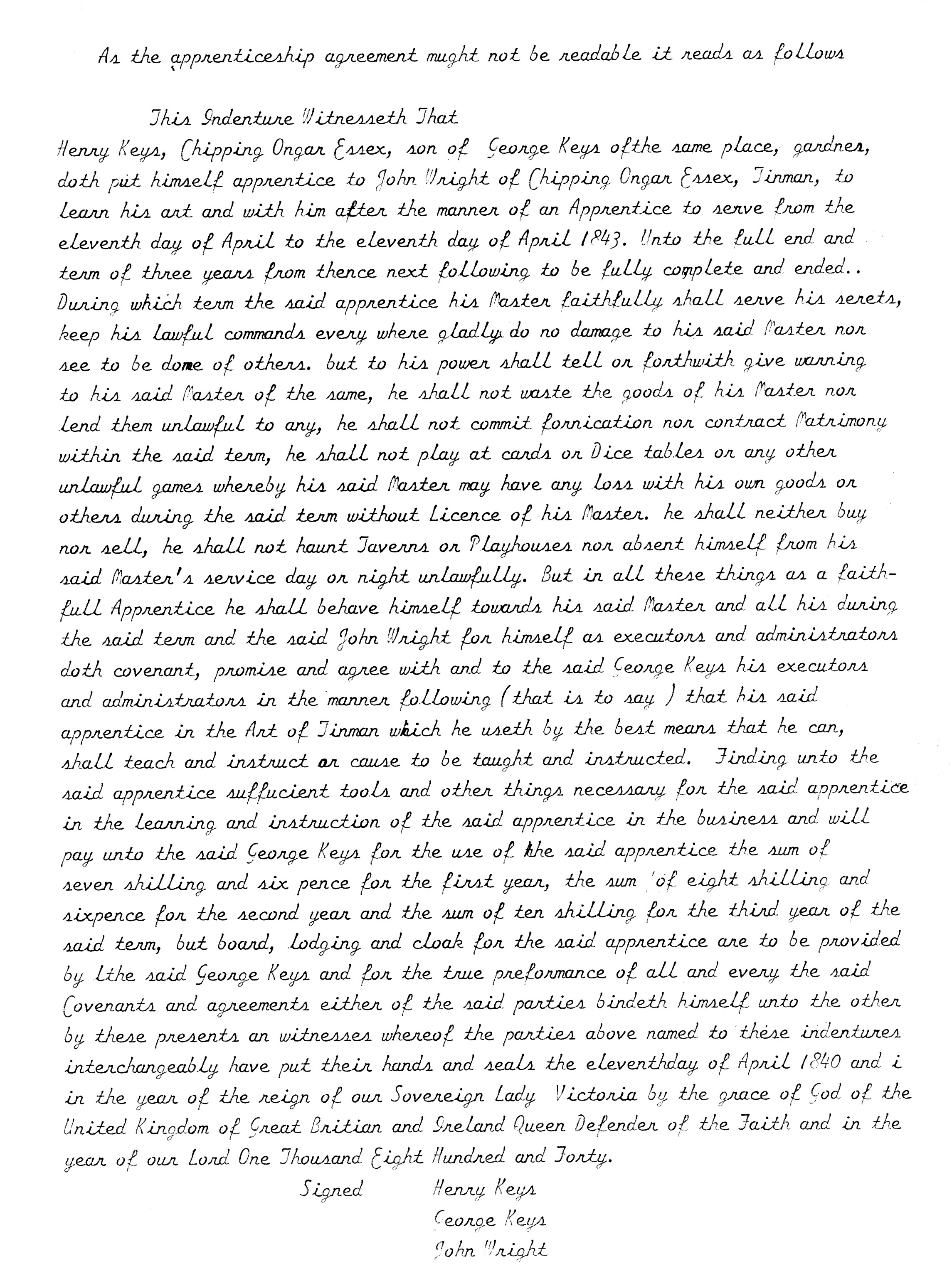
April 11, 1840 – Apprenticeship contract for Henry Keys to tinman John Wright

The day before Henry became 18 years old (in 1840) he entered into a contract of apprenticeship with a tin plate worker (aka a tinman) named John Wright.  The contract was for a period of three years and was signed by Henry Keys, George Keys, and John Wright.  (Pretty cool to see the signature of my great, great, great grandfather.)

The day before Henry became 21 years old (1843) he completed his apprenticeship and became a Tinman.  (He did not have a friend named Oz.  At least there is no record of anyone by that name giving him anything!)  But the most relevant part of the completion of his apprenticeship is that he rewarded himself for the accomplishment.  He had saved up money during these three years and the cherished reward that he bought himself was a violin.  It shows you what was important to him.

As a bachelor for twenty-six years, he worked as a tin plate worker making gas meters.  I’m sure he was also playing his violin during this time, but there really isn’t much else written about this period in his life.  It was on November 8, 1869, that he married Martha Ann Cook on her 33rd birthday.  She herself was an independent person who had a business of her own making clothes and accessories for children.  She must have been a musical person as well, because the only portrait of her shows her standing next to a piano with her hands fiddling with the keys.

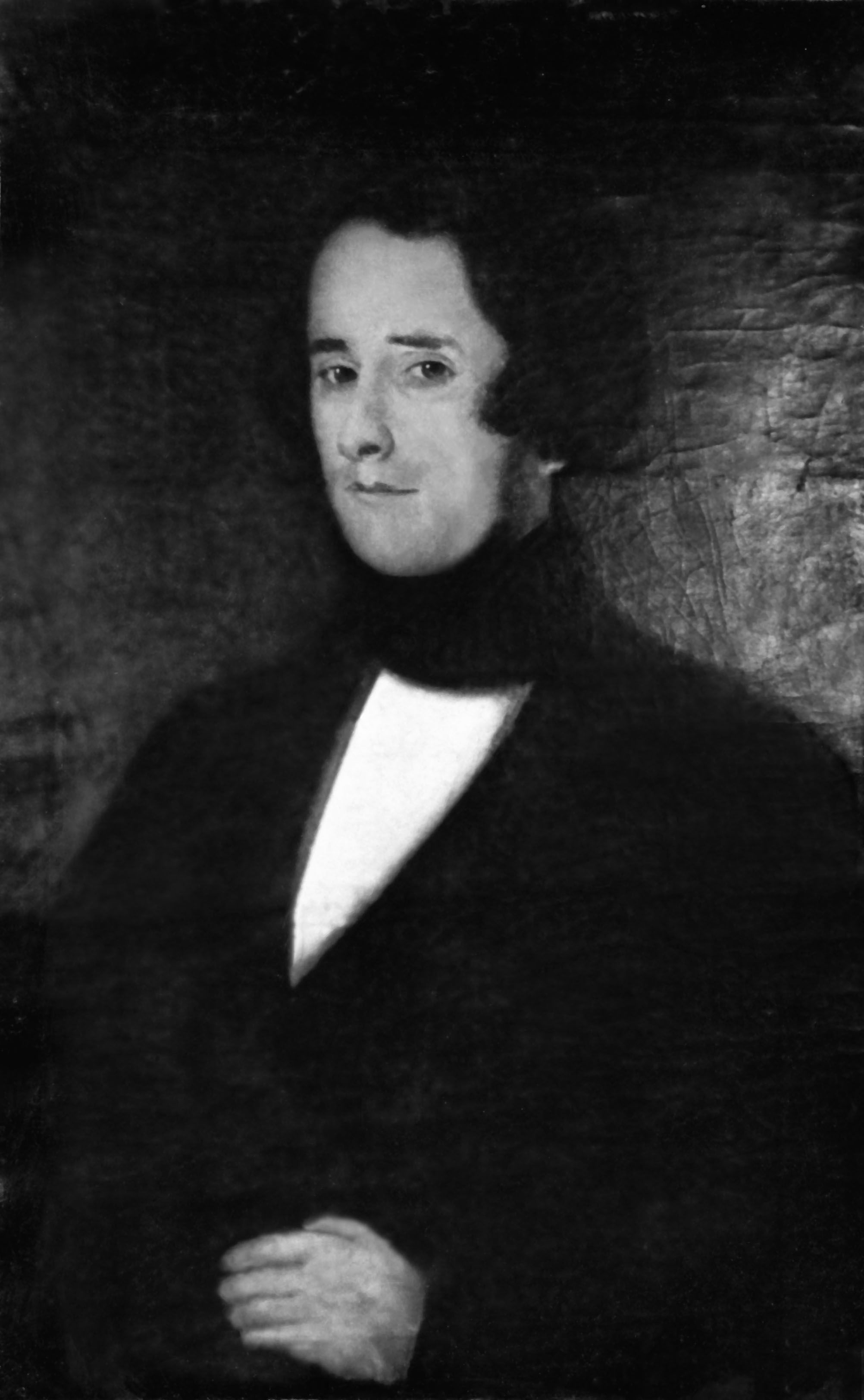
Henry Keys

I believe this is a photo of a portrait of Henry Keys. I estimated it to be from 1880, but it could be earlier.

By 1881 Henry and Martha had five children together.  Another sign that they were a musical family is the fact that the two boys Henry and Alfred sang in a boys choir in London.  On at least one occasion they sang with the choir for Queen Victoria.  Their daughter Daisy (my great grandmother) was known to play the piano, but I’m not sure when she learned.  From the portrait mentioned earlier it looks like there was a piano in the home, so she could have learned as a child in England.

Henry and Martha had family members who moved to America.  They decided that they would move the family to America also and began to save money for this new chapter in their life.  So again, this must have been something important to them.  But sadly, Henry suffered with bronchitis for four months and died at the age of 64 in 1886.  He never made it to America where his wife and children would eventually go.  But his violin did.

I’ve read accounts of the move to America and they always say “They sold everything they had.”  But they didn’t.  They held on to a few prized possessions.  One of those cherished items was the violin that Henry bought in 1843.  When they made it to Louisiana, at some point Martha gave the violin to her son Leonard with the proviso that he would learn to play it, as long as he practiced in the barn!  This makes me laugh.  It reminds me of my mom.  When I was in junior high, I learned how to play many different instruments.  My dad was the band director so I could taken them home with me.  The only thing my mom discouraged me from playing was the violin.  When a person is learning the violin, the notes can be rather screechy in a way that would give mom a headache.  I acquiesced.

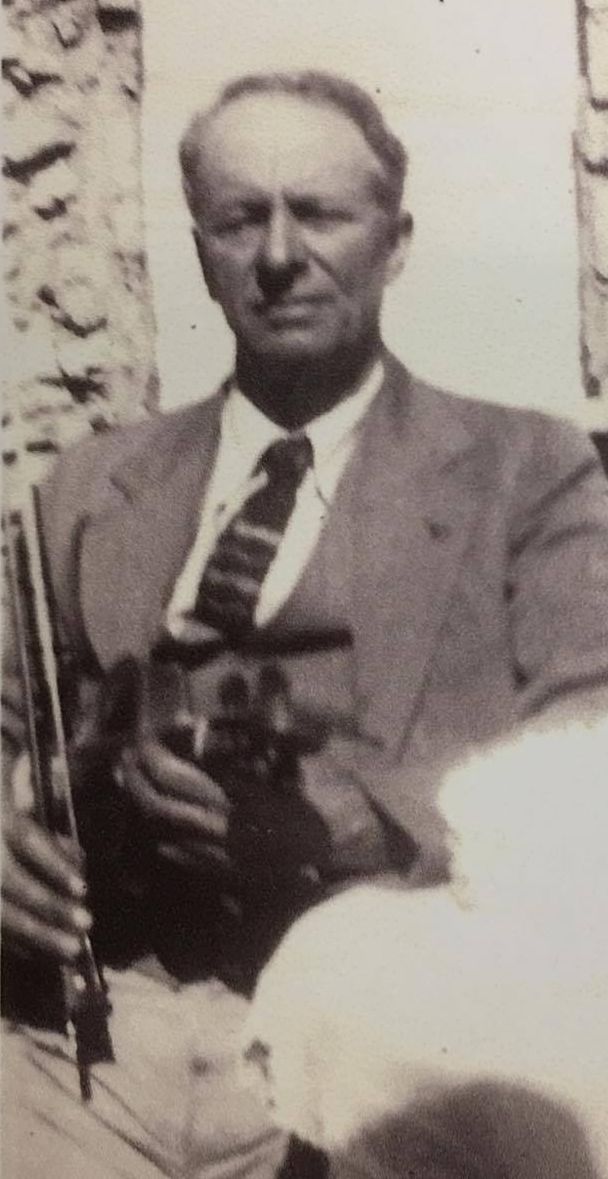
Leonard James Keys with the violin his father bought in 1843.

And learned the violin Leonard did.  But he also learned to play the trombone and flute.  His older brother Henry played the violin, clarinet, and flute.  I’ve told you that Daisy played the piano.  Her husband Harry Phenice played the violin as well.  So did the husbands of Daisy’s sisters Ruth and Mabel.

When I was researching this information, I notice there are a lot of descendants who are musicians.  It could be that every family has a musician here and there, but it does seem like quite a few in my family.  The researching also made me wonder about that old violin from 1843.  Is it still around?  Does a family member have it?  I know that musical instruments can last a long time if taken care of properly.

So I asked my cousin Carolyn (daughter of Edith who provided me with the improved version of the photo/portrait of Henry Keys) if she knew of the whereabouts of that violin.  Her grandfather was Leonard Keys, so it is likely to be with her family group somewhere if at all.  She let me know that “Yes, indeed!” that violin is still in existence.  It is in the possession of her cousin Johnny and he still enjoys playing it!  How cool is that!?  She sent me this photo of her grandfather Leonard with the cherished violin.  A family keepsake that one day I’d like to see in person and photograph.

Here is a transcription of the apprenticeship contract of 1840 that came from Edith Keys Segraves’ book.