8 Years, 4 Months, & 16 Days From Home

Two weeks ago, I wrote a recap of the 10 years since I had discovered my Mooney Irish connection.  Then with St. Patrick’s Day happening five days later, I was thinking about my other Irish connections.  It was the McCullough family history that I was thinking of.  I found out about that family connection two years ago.  I even posted a short blurb that mentions an event that happened many years ago that is very interesting and tragic.
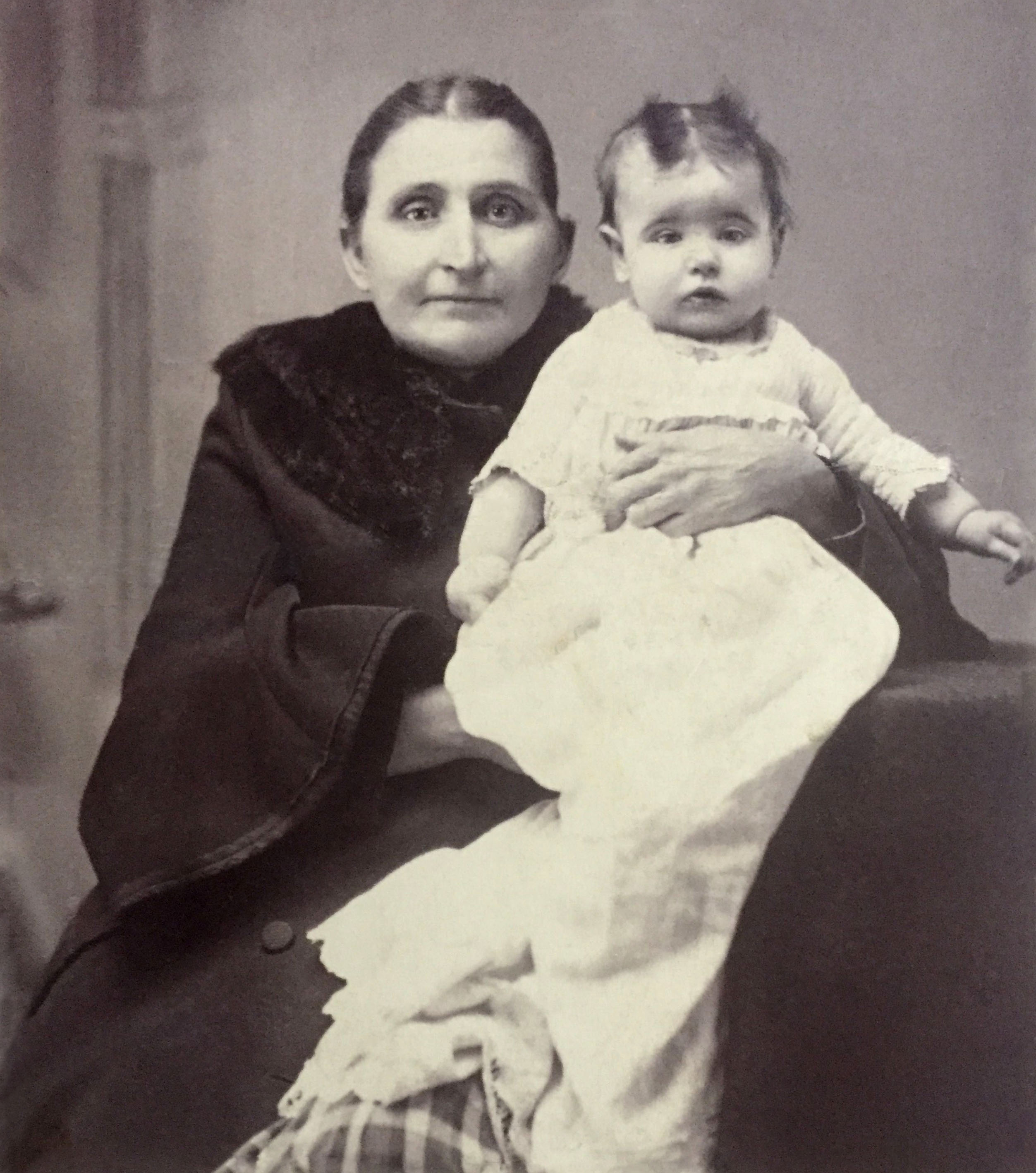
Photo of Cathrine Jane Foster Phenice and her daughter Emma Phenice in 1890 in Nebraska. Her ancestors are the subject of this story.

The connection comes through my mom’s maternal grandfather.  My mom was Betty Lou Bucklin Landry, her mother was Myrtle Phenice Bucklin, and Myrtle’s father was Harry Clifton Phenice.  HC’s mom was Cathrine Jane Foster Phenice.  Her ancestry was undiscovered for many years.  I made that exciting breakthrough in 2019, and I keep finding more interesting information about her family lines.  The story I’m talking about today comes through her father Morris Foster’s line.  His parents were Hugh Foster and Mary Elizabeth McCullough.  Mary Elizabeth’s parents were James McCullough and Martha Hance. 

James was born in 1720 in Belfast, Ireland, according to the writings in his journal.  Yes, he wrote in a journal, and the information has been saved through the years.  I have not seen it yet, but I would really like to one day.  Martha was born around the same time and probably in the same area.  How else would they end up married and immigrating to the North American colonies together in 1745?  They were ready to start an exciting new life in the New World.  They ended up settling in New Castle, which was in the colony of Delaware.

They had their first child, a daughter named Jean, about a year or so after arriving.  Their next child was John, who was born on May 27, 1748.  We know his exact date because it was written in his father’s journal.  It would have been nice if he had written all of his children’s names.  I guess I’ll just have to settle for what I get.  The family relocated at some point after John’s birth.  They moved 162 miles west into the interior of the Pennsylvania in what is now known as Franklin.  At that point in time, the further west you went, the wilder the territory.

In 1750 their third child was born.  That would be my ancestor, Mary Elizabeth.  She was followed the next year by a son that was called James.  He was born on June 11, 1751.  I will now refer to the older James as James I.  The last of the children was a son named Hance who was born around 1755.  Maybe James I wrote the birth dates of John and James because they were the central figures in the story that is infamous in the McCullough family.

It all started on July 26, 1756.  The McCullough family woke up and did the things they normally did every morning.  They probably got dressed, ate some breakfast, and talked about what they would do that day.  Nothing forewarned them of anything untoward coming their way.  They were growing flax and it was time to start preparing for harvest.  It was a family event, and they all went into the fields to start their work.  At some point 8-year-old John and 5-year-old James wandered off.  Martha might have seen them heading off and thought nothing of it.  Boys will be boys.  But not this time.

John and James walked down the road from their house like they had probably done hundreds of times.  They weren’t concerned with how far they walked, as long as they were back for their next meal.  One of them would not taste a home-cooked meal from his mother ever again.  As they were walking, their neighbor Mr. Allen – John Allen- stopped them to warn them of danger.  A White man in the community had been killed by an Indian of the Delaware tribe.  He told them to hurry home and let the rest of the family know of the danger.

John Allen must have hightailed it back the other way to warn other neighbors of the shocking news.  The two boys were alone again, and they ran toward their house to warn everyone else.  They didn’t make.  Just 50 yards from the house, they were accosted by five members of the Delaware tribe and a Frenchman.  The boys fought and screamed to try to get away, but to no avail.  Their family didn’t hear them and were unaware of what was happening.  The boys were tied up.  As John was forced to walk west for the remainder of the day, James was carried by the French and Indian captors.

This all occurred during the time of the French and Indian War.  At least that’s what it was known by the British colonies.  In French territories, like Acadie, it was known as the Seven Year War.  It was a huge war between the two superpowers – France and England.  I’ve discussed it before because that’s when England Exiled the Acadian people from their homes.  But it led to other hostilities as well – killings, scalpings, and abductions.  When I wrote those other posts, the French were the good guys.  This time, the Frenchman is one of the bad guys.  It’s all a matter of perspective.

Back to the kidnapping.  I’m sure later that day Martha and James I must have heard about the killing of the White man in the community.  Had they already started to worry about John and James?  If not, they would have started in earnest when they heard the news.  Were their babies dead?  Or would they ever see them again?  It’s hard to imagine what they went through.  Perhaps Martha decided the best way to deal with it was to take one day at a time.  “Day one,” she whispered to herself with a shaking breath.

John and James continued west with their abductors the next day.  John thought that he was going to be killed at different points, like when they threw him in cold water.  But they didn’t.  They plucked the boys’ hair and painted their skin red.  They reached Fort Duquesne, which was a French fort.  At this time, the boys were separated.  John continued further west with the Delaware, and he never knew what became of his brother.  Meanwhile, back at home, Martha was unaware of what was happening with her boys.  She continued her counting, “Day two.”

John was taken to northwestern Pennsylvania and left with a Delaware Indian family and given the name Istenggowehhing.  They would treat him as part of the family, and he would call them aunt and uncle. He learned their ways and their language, and learned to like their way of life.  It is thought that he was taken as a replacement for a son that they had lost.  Meanwhile, back at the McCullough household, Martha kept up her counting:  One week… one month …six months.

“One year,” she whispered in wonder.  “How did I survive this worrying year?”  Yet, the years moved on.  “Two years.”  “Three years.”  “Four years.”  Then at five long years, some promising news was heard.  Somehow someone that knew John had seen him with his Indian family and recognized him.  They told James I and Martha where he was.  It was a pretty long journey, but I’m sure his parents didn’t think twice about making the trip.  At least they’d have their John back!  James I decided to make the trip to Northern Pennsylvania, while Martha stayed home with the children.  The excitement was palpable!

James made his way north and finally reached the home of the Delaware people that had his son.  But by that time John no longer was familiar with the English language and had grown accustomed to his new home.  Imagine his father’s shock and surprise when John refused to go with him!  James I insisted and began the journey back to their home with his son.  He even tied John’s legs at the bottom of a horse to prevent him from running away.  It was of no use.  John escaped and went into the woods to hide until his father gave up and returned home.  Then John went back to his Indian family that he was familiar with.

Martha didn’t know when James I would return with their son, but she was waiting happily.  As she went to bed she whispered “5 years, 2 months, 18 days” with more excitement than dread.  Soon her counting for John would be over!  The next day James I came home – alone.  They just stared at each other for a long time as tears slowly ran down their faces.  As they embraced, he explained, “He didn’t want to come back.  I tried…I tried so hard.  He didn’t want to come.  He ran off.”  That was a difficult day.  That night when Martha whispered, “5 years, 2 months, 19 days,” it felt as raw as Day One.

Time passed.  “5 years, 6 months.”  “6 years.”  “7 years.” “8 years.”  Things were changing.  The French and Indian War was over.  The animosity between the two sides had settle down a bit.  Cooperation between groups was starting to happen.  One of those things was working with getting abducted children back to their original families.  There was a Colonel Bouquet who worked on that issue and was able to obtain the release of several individuals, including John McCullough.  Finally, John was reunited with his overjoyed parents.  When someone commented on how difficult it was to wait 8 years without knowing when it would end, Martha corrected them by saying, “8 years, 4 months, and 16 days.”  She said it again as she turned to her son and welcomed him into her arms.

John may not have appreciated this woman talking English (with an Irish accent) and wrapping him in her arms at first.  Or maybe he remembered his mom.  He was now 16 years old and almost an adult.  He adjusted to being back among his family and relearned the English language.  After a while he knew what his mom meant when she would say, “8 years, 4 months, and 16 days.”  It was a reminder of the time that was stolen from her.  John would grow up and marry, yet he stayed on family land.

Though I wonder if Martha’s counting continued.  Her son James was never heard from again.  There was “9 years.”  Then “10 years” and “20 years.”  At 23 years, 4 months, and 6 days, her daughter Mary Elizabeth gave birth to her first child and named him James.  Martha was pleased to know that she wasn’t the only one that thought of The Stolen One.   If the counting continued for her boy James, Martha’s last thought could have been, “30 years, 1 month, and 19 days.”

Emmanuel & Celeste Landry

Emmanuel and Celeste Landry’s tombs are in the St. John the Baptist Catholic Cemetery in Brusly, Louisiana.

Sometimes I tend to overlook some ancestors who I don’t have photos of.  That’s not good.  Everybody deserves a mention.  When I do mention Emmanuel Landry, many times it is only in reference to his father Joseph Ignatius Landry.  I descend from Joseph Ignatius (or as the French would have said the name – Ignace.  And this family was definitely French.) five different ways.  And two of those ways are through Emmanuel Landry and Clarice Celeste Bruneteau Landry.

Both Emmanuel and Celeste were born in St. Gabriel, Louisiana.  Emmanuel was born in 1781 and he was in the first generation of Landrys in my line born in the United States.  All of his ancestors were Acadians.  And though he married someone with a French name – not Acadian, he was related to her.  That’s because Celeste’s mother was Anne Marie Hebert.  Anne Marie was born in Acadie and as a girl, she and her family and fellow Acadians were Exiled from their homeland.  The Hebert family spent their time of Exile in Georgetown, Maryland, while the Landry family spent their time in Upper Marlboro, Maryland.

But Celeste’s father was not an Acadian.  His name was Pierre Bruneteau and he was born in Ardennes, France.  He was the second husband of Anne Marie Hebert.  Her first husband was fellow Acadian Joseph Dupuis.  Anne Marie and Joseph had six children together.  I descend from their fourth child – Magloire Dupuy.  Anne Marie and Pierre married after the death of Joseph.  They only had two children together.  Celeste was born in 1790, and she was the baby of the whole bunch.

And like I said earlier, she would grow up and marry her cousin Emmanuel Landry.  I really shouldn’t call them cousins.  They were only 4th cousins.  Their common great great great grandparents were Rene Landry and Marie Bernard, some of the founders of Acadie.  Celeste and Emmanuel were probably not even aware of their common ancestors.  They probably just considered themselves husband and wife.  They were married February 5, 1808, in St. Gabriel, Louisiana.  The only surviving parent of the two was Anne Marie Hebert.  Yet two of their grandparents were still alive.  Anne Marie’s 89-year-old mother Marguerite Melanson was alive, as was Joseph Ignace’s 82-year-old mother Marie Magdeleine Babin.  They both lived in St. Gabriel at the time, so they likely were at the celebration.  Laissez les bons temps rouler.

1844 map of Brusly, Louisiana, along the Mississippi River.

Celeste and Emmanuel continued to live in St. Gabriel as their family grew.  Their first child was Manuel Dorville Landry in 1809.  Next came Rosalia and Jean Baptiste in 1811.  Then Clarissa Doralise was born in 1812, Anna Adele in 1817, and Marguerite Basalite in 1821.  I descend from Anna Adele (and her husband Amedee Bujol) and Marguerite Basalite (and her husband Joseph Auguste Leveque). (See family tree below.) Jean Baptiste died in 1823 at the age of 11.  A few years later the family relocated to Brusly in West Baton Rouge Parish, as did other Landry family members.

By 1844 Emmanuel and his brothers Elie and Narcisse had plantations along the Mississippi River.  You can see their names on this map of the river and some of the landowners of the area.  If you look at the names, you’ll see a lot of Acadian names that are familiar – Hebert, Babin, Dupuis, Daigre, and Forest.  They were all first-generation Acadians born in the US, after their parents had everything taken away from them when they were Exiled from Acadie.  From that perspective, they were making progress in their new home.


Here is my dad’s tree showing the connections to Emmanuel and Celeste. Along his maternal line, you can see Anna Adele. His paternal grandmother was Marie Celeste Leveque, who was the daughter of Marguerite Basalite.


My Mooney Connection – Ten Years Later

Mary Ann McGrath Bucklin sometime around the 1880s in the United States.

Can you believe it’s been ten years since I discovered the connection of our family to the Irish Mooney name?  It still seems like new information to me.  But I wrote a blog post about it ten years ago and it included the same photo that I’m posting today.  It’s a photo of Mary Ann McGrath Bucklin, who was the daughter of Maria Ettadosia Mooney McGrath.  Mary Ann was my great great grandmother and Maria Ettadosia was one generation back.

I had known about Mary Ann for a long time.  My mom had her name and the name of her husband Edward McGrath.  Edward and Maria Ettadosia brought their family from Ireland around 1850 and settled in Palmer, Massachusetts.  I’ve never been able to figure out the exact year that they immigrated.  I thought that I would figure it out sooner, but that bit of information has eluded me.

The 1900 Census has three columns relating to that information.  It asks for year of immigration, number of years in the US, and date of naturalization.  Sadly, Mary Ann died in April of 1900 and the Census wasn’t taken until June or July of that year.  Most of her siblings died before then also.  It doesn’t help that Mary and Edward are common names for McGraths from that time period.  Maria Ettadosia and Edward both died in 1878, so they weren’t on the 1900 Census either.

McGrath/Mooney info by Mary Ann McGrath McMahon p. 1

I’ve also looked for more information about the Mooney family.  When Maria Ettadosia died in 1878, her death record shows that her parents were Arthur and Catherine Mooney.  I haven’t been able to go much further with that either.  I don’t know when or where they lived and died.  I’m sure they were born in Ireland and lived most of their life there, but I have no idea if they came to America or not.  I’ve seen a few Mooney people who were associated with Maria Ettadosia and Mary Ann, but I don’t know what the connection is.  They are likely family members, but it’s not certain.

McGrath/Mooney info p. 2

I do know the names of all of the children of Edward and Maria Ettadosia.  That information came from the family line that told me about the name Maria Ettadosia Mooney.  The first child of Edward and Maria Ettadosia was Arthur.  There is no record of him ever marrying.  He died in New York.  The next child was a son named James.  He had a daughter name Mary Ann McGrath, who married James McMahon.  Mary Ann McGrath McMahon is the one that started writing down the McGrath/Mooney family history that was shared with me.

I have most of my family history information on computer.  I sometimes think it’s odd that people keep their information on paper using a pencil or pen.  It’s definitely old fashioned.  But when I see hand-written information like this about my family, I think it is beautiful!!  Not that it’s tidy and easy to read, of course.  But these pages show the names of the children and included in that list is my great great grandparents Mary Ann McGrath and James Bucklin.  Even after ten years, I find it a bit exciting.

Page 1 introduces Edward and Maria Ettadosia, and then lists their children Arthur, James, and Daniel.  If you look closely at it, there is a line that says, “Came to America 18__.”  Even Mary Ann McGrath McMahon didn’t know the date of immigration!  She was born in1861 and died in 1947.  I don’t know when she wrote this information, but she was born about 100 years before me.  She was much closer to the time of it all happening.  Of course, now we have access to more information.  Hopefully that date is somewhere to be found.

Page 2 of the info shows the rest of the children: John, Margaret, Mary Ann, and Catherine.  All of Mary Ann’s siblings married other Irish immigrants.  Mary Ann married an American with family lines that had been in the United States for five or six generations.  From what I can tell, they were predominantly from England.  Mary Ann and James’s son Louis Bucklin married Addie May Hine, whose ancestry brought some German to the mix.  Louis and Addie’s son Fred married Myrtle Phenice, who added some more English and Irish.  Their daughter was my mom – Betty Lou Bucklin.  She married Bob Landry who was pretty much all French.  Most of that came from Acadian ancestry which originated in France.

When I have a DNA match from Louisiana or Canada, they’re usually from my dad’s side.  With all of the cousins marrying each other through the years, there’s no way to tell how the different DNA segments travelled down to me.  If the match has a history that includes Pennsylvania, I’m pretty sure they will match through my mom’s Phenice line.  Those with history of Indiana are usually through the Hine family line.  If they are from Massachusetts, I can be assured that it is a Bucklin match.

I like to see the different connections to the various families.  But I really enjoy when it is an Irish connection.  Particularly when I can say, “Did you know that our great great great grandmother’s name was Maria Ettadosia Mooney McGrath?”  I love that name.  Erin go bragh.

Patureau and Landry Families in 1921

The Landry and Patureau family in Lafayette, Louisiana in 1921.

I got this photo from Box 301 in June of 2024.  Box 301 Collection was a box that was in my Aunt Wana’s attic for many years.  We don’t know how many years, because it was discovered about ten years after her death.  Some attics are just dusty with nothing of value in them.  Aunt Wana’s attic was a treasure trove for old photos.  Both Box 301 Collection and the Tin Can Collection are from that.  I’m hoping more treasures will be found in other cousin’s attics and/or homes.  And of course, I hope they would be willing to share them with me.  I would be sharing with them if the reverse were true.

I recognize this event in the history of my dad’s family.  Other photos were taken on the same day with various groupings of family members.  Since they were all wearing the same clothes, it’s pretty easy to determine that it was the same event.  That event was the baptism of my dad’s first cousin in 1921 in Lafayette, Louisiana.  My dad was Robert Joseph Landry, Jr. and his first cousin was Therese Wynhoven Mouton.  They were known by various names.  My dad was known as Bob, Bobbie, Pluto, and Pappy.  His cousin was known as Therese, Tez, or Wynie. 

They were cousins because their mothers were sisters.  Those sisters are sitting in the forefront of this photo with little Tez.  Tez was the first grandchild of the Patureau family.  She was the daughter of Emma Patureau Mouton who is holding her here.  Her father was Toby Mouton.  He is the tallest person in this photo.  Emma was the oldest child of Vincent Maximilian Patureau and Marie Therese Landry Patureau.  Max is on the right edge of the photo.  Not that you would be able to tell, but that looks like him and the suit he was wearing that day.  I’m not sure if I took a bad photo of this photo.  He might be showing up in the original photo, and I didn’t get it all.  Maybe my cousin can help me out with that.  Marie Therese Landry Patureau is not in the photo because she passed away in 1909.

My wonderful grandmother is sitting next to her sister Emma.  Her name was Germaine Erie Patureau, but she usually went by Erie.  But she was known to us cousins as Mee Maw.  She was the best.  Of course we could be a bit prejudiced.  I’m sure all of her sisters and brothers were wonderful people as well.  This was the year that my grandparents got married.  Erie Patureau married Rob Landry in November of 1921.  All the rest of the people in the photo are relatives of theirs.

Standing on the left in the photo is Zim Landry Landry.  She’s a Landry that married another Landry, but she was around a 3rd cousin to my grandfather.  She’s in the photo because she was married to my grandfather’s older brother Joe Landry.  He’s standing next to Zim and a little behind her.  Another Landry brother is in the background in the middle of the photo.  That was Louis or Louie Landry.  He was married to Clemence Babin, who was Marie Therese Landry Patureau’s half-sister.  Clem is in front of him and she is looking around the head of one of the Patureau sisters.  That sister is the youngest one that survived to adulthood.  Her name was Sylvie Patureau and she married Son Marionneaux from Plaquemine.  They lived in Plaquemine and many family members still live in that area.  I don’t know what that big round thing on her dress is.  When I look at it, it makes me think a child is standing in front of her.

The next Patureau sister (with a noticeable necklace on) is Marie Therese Patureau.  That is a popular name in the Landry and Patureau families.  To differentiate her, she was always known as Bee.  To the right of Bee is one of the older sisters Lydwin.  She was known as Win and she never married.  Everyone always seemed to say really nice things about her.  I think she was very giving and loving with the family.  And finally we get to one of the Patureau brothers.  I know that younger brother Vincent was at this event because he was in another photo.  He may be the person cut off on the left edge of the photo.  Again, I hope I didn’t leave off someone inadvertently.  I must be more careful.  But you can see older brother Rome on the right with the thin tie.  He was younger than Emma, but older than Win.  He’s standing next to one of the most important family members of the group.

When I’m looking at her now with her arms crossed, I get the feeling that she’s saying, “Don’t forget about me, young man!  I’ve been waiting patiently for you to acknowledge that I’m even in this photo.”  Sorry, Grandma Belite, we definitely don’t want to forget about you.  Grandma Belite is my great great grandmother Marie Amelie “Belite” Bujol Landry Babin.  Her maiden name is the not-so-common Acadian name of Bujol.  She was known as one of the beautiful daughters of the Widow Bujol.  She was married twice.  Her first marriage occurred shortly after the Civil War in Brusly, Louisiana, when she married the local war hero Trasimond Landry.  Their first daughter was Marie Therese Landry, later known as Patureau.  After Trasimond died at a somewhat young age, Belite married her second husband Magloire Babin.  They were the parents of Clemence Babin, later known as Landry.

I think that ties everyone together quite nicely.  It’s a nice photo of the combined Landry and Patureau families.