Finding Cathrine Foster’s Family

Cathrine Foster Phenice circa 1910

Have I done it?!  I think I have.  The pieces all seem to add up.  I am very excited about it, since members of the family have been trying to find evidence of Cathrine Foster Phenice’s family for at least the last 50 years.  DNA was helpful in this case, but so was time spent looking.  Let me see if I can explain it for those who are interested.

My mother’s name was Betty Lou Bucklin Landry.  Her mother was Myrtle Phenice Bucklin.  Grandma’s father was Harry Clifton Phenice.  His parents were Samuel Charles Phenice (witness to the Lincoln Assassination) and Cathrine Jane Foster (died as a result of terrible burns).  We knew some of the ancestry of Samuel, but not of Kate.  The one thing we knew for certain was that she was born in 1848 in Mercer County, Pennsylvania. 

I wanted to find out more, so I decided to use my newest tool for researching.  I did a search on newspapers.com for Phenice and Kansas.  I had already done a search for Phenice and Nebraska.  I found some interesting items, but nothing led me in the direction of Kate’s Foster family.  I had to be open to the chance that her last name was not originally Foster.  It’s possible she could have been married before or possibly adopted.  There was rumor that the Foster name came about because she had grown up in a foster family.  If that had been the case, the title of this post would be “Finding Cathrine’s Foster Family” and it isn’t.  But I’m getting ahead of myself.
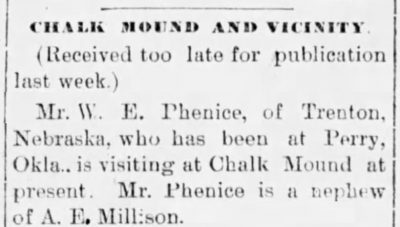
My search for Phenice and Kansas came up with one particularly juicy morsel.  It reads, “Mr. W. E. Phenice, of Trenton, Nebraska, who has been at Perry, Okla., is visiting at Chalk Mound at present.  Mr. Phenice is a nephew of A. E. Millison.”  (The Eskridge Tribune Star and Eskridge Independent, August 30, 1894)

I know who W. E. Phenice is.  Samuel and Kate had an older son named William Emory (b. 1871) and they homesteaded in Trenton, Nebraska, from 1886 to 1889.  So that part fits just right.  But neither Samuel nor Kate had a sibling by the name of A. E. Millison, because that’s the only way he could be a nephew. 

I didn’t really think about it much and then went to look at one of the sites that I have my DNA matches.  And can you guess what I found?  I found a DNA match with the last name Millison.  It really stood out since I had just seen this newspaper article with the same surname identified as a relative.  So I had to check it out a little.  I looked to see who else in the family was a DNA match to this Millison person.  My mom and both of her siblings matched him at the same point on Chromosome 9.  None of their first cousins were a match, but one of their second cousins were.  And…drumroll, please…it was our cousin Mona Q. who also descends from Samuel and Kate Phenice.  And it wasn’t just any other random DNA matching segment, it was the same exact spot on Chromosome 9. 

So I sent off a note to that DNA match to ask what he knows about the Millison name.  I was also wondering how he might be connected to this A. E. Millison.  And if he did know who he was, was either he or his wife from somewhere around Mercer County, Pennsylvania.
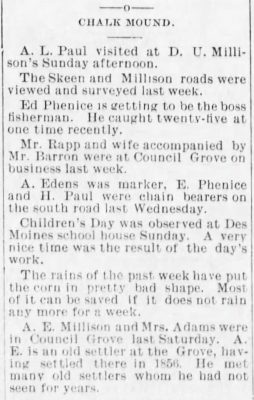
After I sent the note, I looked him up on 23andMe, which is where he tested.  On his profile he showed that his great grandparents lived in Council Grove, Kansas, which is the same area as Chalk Mound.  So he looked like he was from the same family.  Then I found an obituary for a Uba Millison at newspapers.com.  There was no information in that article, but the name is so unusual that I figured I could search for it on Find A Grave.  It worked!  I found Alexander E. Millison who died in Wabaunsee, Kansas, which is where William Emery Phenice lived in 1895.  But more importantly, I found out that A. E. Millison was born in Mercer County, Pennsylvania, the same place that Cathrine Foster was born.

Of course A. E. Millison was married to someone and she could have been born in Mercer County, too.  Kate and Samuel were both born there.  Amazingly enough, I heard back right away from my Millison DNA match.  That’s practically unheard of.  He was able to provide a few quick links for some family information.  I was able to determine that A. E. Millison was married to Phoebe Cummings who had been born  in Quebec.  So the common DNA came through A. E. Millison.  The name is also spelled Milliron and Milleson.  The family originated in Germany.

I did some research on the family and wasn’t able to find a connection to Kate right away.  A. E. did have a daughter named Orra, which is the middle name of Kate’s daughter Emma (Mona’s grandmother).  He also had sisters by the name of Catherine and Susannah, both of which are family names in the Phenice line.  But the Catherine that was his sister had a well-documented family that did not match our Cathrine.  Where was the connection?

1850 Census record from Venango, Pennsylvania. The first complete household shows Moore, Ann Magdelene, James, Emory, Catharine, and Thos Foster.

I found another tree that had the Millison family documented on it.  I thought I would try a different approach.  I searched for the last name Foster to see if that was in the tree.  Sure enough it was.  And there it was – a Catherine Foster born in 1848.  I went to check out her page and saw that her mother was listed as Anne Magdeleen Milliron, born in Mercer County, Pennsylvania.  She was the sister to A. E. Millison.  There was a brother of Cathrine with the name of Emery, another name to tie it all together.

When I saw that her father’s name was listed as Morris Foster, I thought it looked familiar.  In the beginning of 2018 I had come across a Census record from Venango, Pennsylvania, in 1850.   There was a two-year-old daughter in the household named Catharine.  She had a brother named Emory, a mom named Ann Magdelene, and a father named Moore Foster.  I had saved this but was never able to find any other information on this household.

Maybe if I had been searching for Morris Foster I would have had better luck.   The other problem is that Morris Foster died in 1852.  Ann Magdelene soon married George Rihel and the first of their nine children together was born in 1854.  So little Kate Foster grew up in a household of Rihels after that point.  She was a Foster child, but in name only. 

Catherine Foster in the Rihel household in 1860

So the relationship to A. E. Millison stated in the article was slightly inaccurate.  Kate was his niece (not his sister) and William Emory Phenice was his grand nephew.  They must have had a close family connection for them to visit like they did.   Yet that article was instrumental in making a great connection.  I am going to have to pay close attention to those old newspaper blurbs about family visiting family because you never know what little morsel of information can lead to a great discovery.

And a great discovery it is.  For Kate’s father’s side, I only have his name so far.  But for Anne Magdeleen, she is the first of four generations found.  The family was in Pennsylvania for a long time.  Most of them were from Germany, and one of our ancestors was born on the voyage to the US.  Another was a Revolutionary War soldier who died in the Battle of the Wabash at the age of 36.

Now that I’ve updated my family tree with these new names, I’ve been able to identify many DNA matches who also have these names.  I had suspected that they were connections through Cathrine Foster and now I have enough information to make the connection. 

Now that I have walked my way through all of this information, I’m starting to believe it a bit more. 

Cathrine Jane Foster Phenice family tree
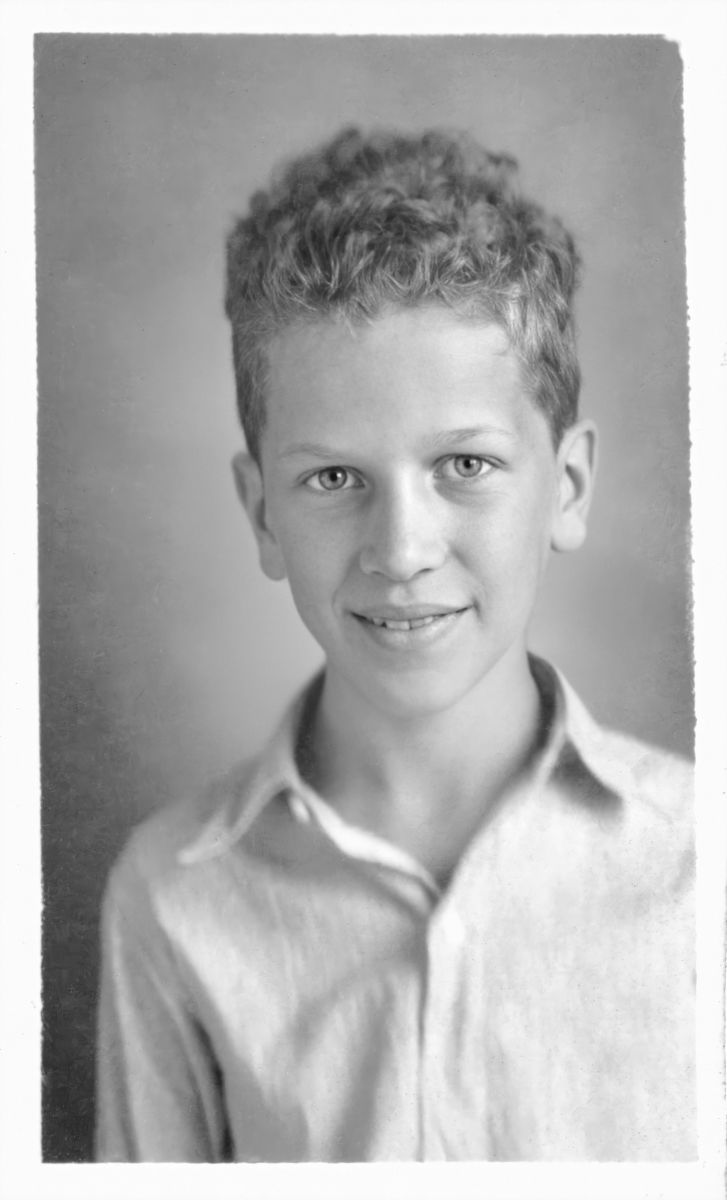
Bobbie Circa 1937

I wasn’t sure what I was going to write about today.  There aren’t any 100 or 200 year anniversaries in my family that I am aware of.  So I just decided to look through my old photos and see if anything jumped out.  I had been thinking of an old photo of my dad today, since it is his side of the family’s turn for a posting.  I looked at that old photo of my dad as an infant, but it didn’t inspire me.  So I kept looking through my folder.

Robert Joseph Landry, Jr. in Lake Charles, Louisiana, in 1937. (Photo edit by Van Landry

And then I saw this photo.  I’m pretty sure that no one in my family is familiar with this photo.  I know it was in a group of photos of my dad from his school days.  When I was in high school or so I put together a family photo album that included a few old photos.  For me back then, it meant including a few photos of my parents’ grandparents and some photos of their own childhood. 

Since class photos were the big thing back then, I included my mom’s and dad’s school photos.  This is one of those that I included of my dad, but it didn’t really stand out.  It’s a small black and white photo that gets lost on a page full of other photos.  So when you scan it, it comes out looking much larger and you can notice more details.

Even though this one is a bit blurry, it’s a nice photo.  He looks like a sweet, cute kid.  I did clean the photo up a bit.  When I zoomed in on the photo to get rid of dust and scratches, the different parts of his face reminded me of childhood photos of me and my brothers.  The eyes reminded me of Rob, the middle of the face reminded me of Al, and the lips reminded me of myself. 

But the earlobes didn’t remind me of anyone else but my dad.  He always had those earlobes.  For some reason I thought they must have grown when he got older.  They probably did, but they started out large from the start.  The reason I noticed this is that my mom had connected earlobes and I inherited that trait.  It’s one of the traits that the DNA companies have learned to identify.  Really, though, all you have to do is look!

So there you have it.  A photo of my dad when he was in about the 3rd grade.  Not a centennial anniversary, but sufficiently in the past.

Becoming a Father Posthumously – A Hine Story

Two hundred years ago a young man named Peter Hine decided to write his will.  He was only twenty-four years old and less than a year married.  And though I’m sure he must have had plenty of dreams for a future, he also must have realized that those dreams were not to be.

Peter Hine was born October 10, 1794, to German-born immigrant Johannes Hein and first generation American Juliana Catherina Schneider.  He was the first American-born Hine in my line of the Hine family, though he was not the first one born in his immediate family.  Actually he was the tenth of eleven children.  He was not the first child of John and Catherine to die, either.  He had an older brother named Phillip that died in 1815 and another older brother named John that died earlier in 1819.  There also had been a first-born daughter that died at birth.

Marriage contract of Peter Hine and Margaret Miller

So Peter came from a large family and may have thought that he would follow suit with that tradition.  At the time it was also traditional to get married first, and that’s what he did.  On August 4, 1818, he married his 18-year-old sweetheart Margaret Miller.  His brother Henry signed as a witness.  Henry was almost exactly two years older than Peter.  His birthday was on October 9th, so they may have celebrated together and were close.  He actually was the only surviving brother that Peter had in July 1819.

I wonder if Peter knew he was ill at the time of his marriage?  Or if he knew he was ill when he found out that his newlywed wife would soon be expecting a child?  All I know is that he had consumption and that was not a good thing back in the 1800s.  Margaret gave birth in September of 1819, and you can tell from the title that Peter did not survive to meet his bouncing baby boy.  In July of 1819 Peter must have begun to have some serious problems with his disease, because on July 17th of that year he wrote down his final requests.

July 1819 will of Peter Hine

It is a very bittersweet thing to read.  He writes, “My beloved wife Margaret being pregnant, I give and bequeath unto the child of her body that tract or parcel of land…Twenty one acres…and interest in a certain undivided tract of land lying in Stokes County.  In case my beloved wife should be delivered of more than one child, the children are to possess equal rights to the above mentioned tracts of land.”  He leaves his other belongings to his beloved wife.

He tried to cover all circumstances as best he could.  One child?  Two?  They didn’t have ultrasound back then.  He also could not take it for granted that the child would even survive to adulthood.  That is never a given and there were lots of things that could happen to prevent that from happening.  But the main point was this:  his wife was going to live on and give birth to their child without him being around.  He would not be there to hold his child.  He didn’t even know what the sex of the child would be.

And he wasn’t exaggerating.  As the 1819 diary from Bethebara, North Carolina states, “July 22.  This morning the married Br. Peter Hein died of consumption.”  So less than a week after he wrote his will, he died at the age of 24.  Two weeks later would have been his first year wedding anniversary.  So we can be assured that he is one man who never forgot his wedding anniversary!  It must have been a sad reminder to Margaret. 

I found myself referring to Margaret as “his wife” when I contemplated these events this week.  That’s like referring to my mom as “my dad’s wife.”  Margaret is just as much my ancestor as Peter was.  Part of that is because I think of it as following my Hine line of the family.  But Margaret was my great great great great grandmother and I very much sympathize with her.  What a tragedy she had to endure.

But endure she did.  A month after that first wedding anniversary, she gave birth to her only Hine child and she named him after his father and grandfather.  John Peter Hine was born on September 3, 1819.  He endured as well and lived to collect on his inheritance.  His mother remarried and he grew up in a family.  Not a Hine family, though.  But he lived with his mom, step-father, and six Wageman siblings and made it to adulthood.

Hine descendants in 1919

I’ve talked about John Peter before.  He married Mary Malina Cox and they had seven children together, including my great great grandfather George Henry Hine.  I wrote about the 100 year anniversary of George’s death earlier this year.  Since that post about his death, I came across this old photo that was shared with me by my cousin Carla.  (Thanks again!) 

I am pretty sure this was taken at the funeral of George Hine in May of 1919.  I see some of his grandchildren, but I also see other Hine family members.  I don’t know for sure who they are, but I’ve seen them in another photo identified as Hine family.  I’m thinking they are the family of George Henry’s brother Allen Larkin Hine. 

Whoever they are, they represent the numerous descendants of Peter Hine.  He never got to meet his son or know if he would make it to adulthood.  He could never have imagined all of the descendants that he had in 1919, much less all of the ones who are alive today.  So let’s give a bit of thanks to the short, yet productive life of Peter Hine.

The Patureau Bakery

Have you ever heard of the Patureau Bakery?  I hadn’t heard anything about it before I found a reference to it this week.  Granted, it was a long time ago that we’re talking about, but with all the research that my dad and grandmother did, it seems like it would have come up.  Maybe they knew about it and I wasn’t listening.  There are lots of things that I wish I could ask them.  Now I have to rely on old newspapers and other documents in one place or another.

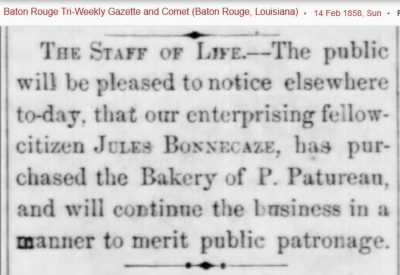
So this is what I found.  It’s a newspaper article from the Baton Rouge Tri-Weekly Gazette and Comet on Feb. 14, 1858.  The title of the article is “The Staff of Life” and I’m not sure what that means.  It talks about a man named Jules Bonnecaze that purchased the Bakery of P. Patureau.
Now it doesn’t say that the baker was Pierre Patureau or that the bakery was in Plaquemine, but I’m pretty sure that’s who they were talking about.  Even though I hadn’t heard about a bakery owned by the Patureau family in Plaquemine, I had wondered  if there had been one.

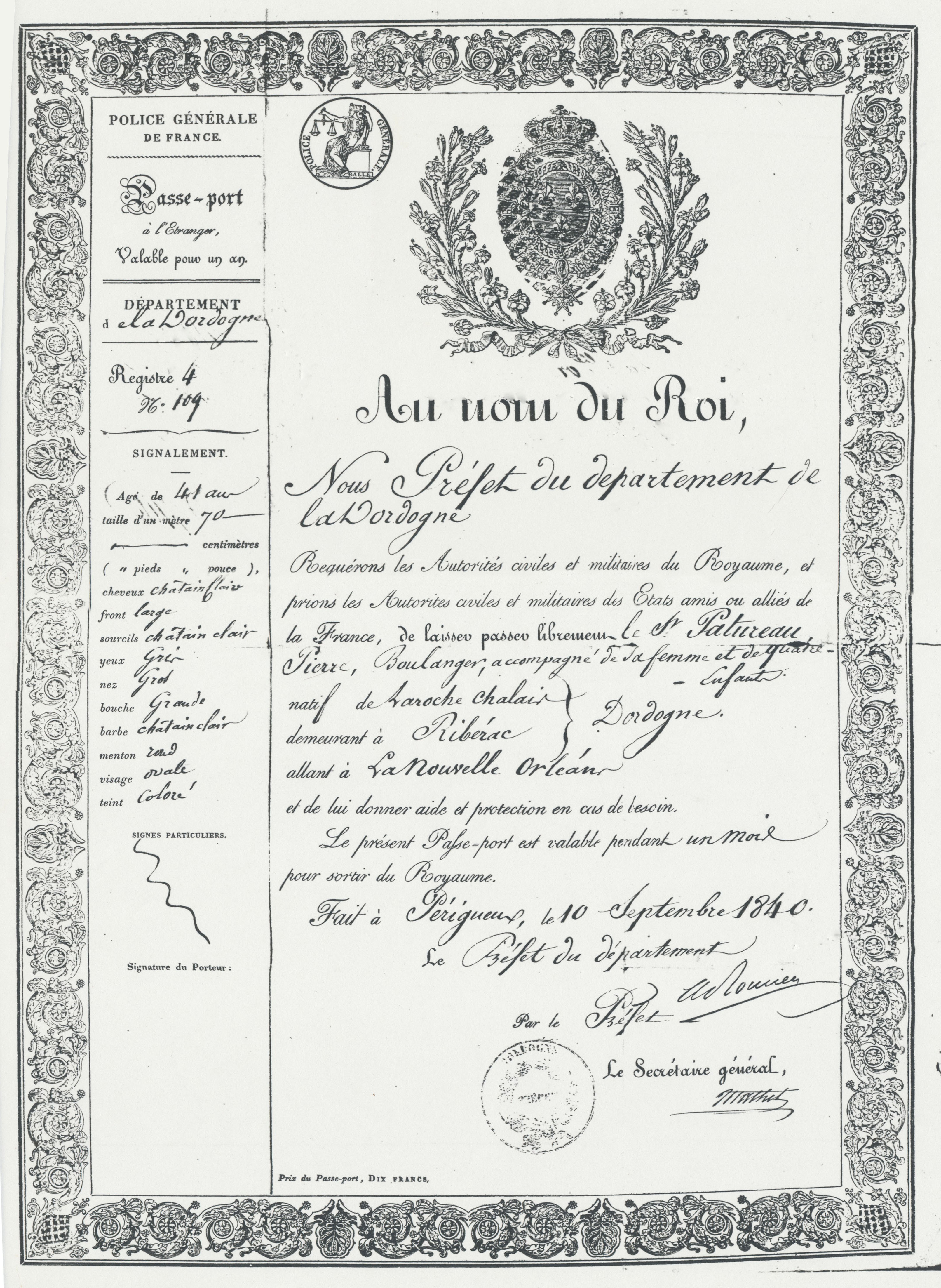
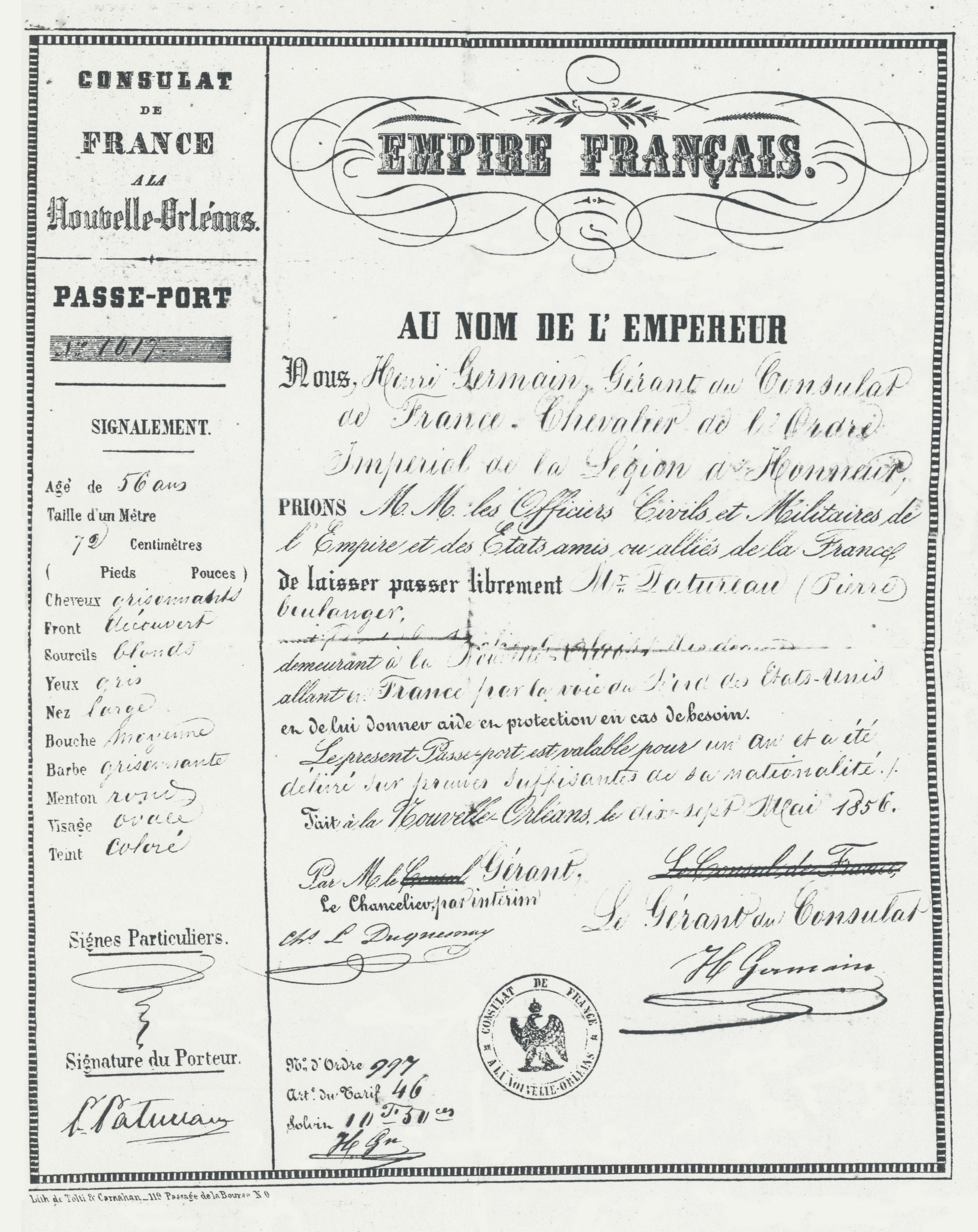
Pierre Patureau was born August 29, 1800, in LaRoche-Chalais, Dordogne, France.  He was married to Anne Rose Machet on July 24, 1820, at the same place.  Rose was born Aug. 19, 1801, in Mareuil, Charante, Poitou-Charantes, France.   They had five children (including my great great grandfather Ferdinand Pierre Patureau) and then in 1840 they immigrated to the United States.  The passport names Pierre Patureau and lists his wife and four children.  (There was an older daughter named Jeanne who either died or stayed behind in France.) 

On the 1840 passport, as well as the 1856 passport, Pierre is identified as a boulanger.  Boulanger is the French word for baker.  So I knew he was a baker in 1840 when he came to the United States and sixteen years later another passport says the same thing.  He was also listed as a passenger on a ship leaving France in 1857 with the destination of New Orleans.  On that passenger list he was also identified as a baker (boulanger). 

Those documents made me wonder if he continued his culinary skills when he reached his new country.  So when I saw the newspaper article this week, I just knew that the P. Patureau with a Bakery was our very own Pierre Patureau, boulanger.

The other thing I found interesting about the passport is that they give a description of my great great great grandfather Pierre.  Since there are no photos of him, it is the best way to get an idea of what he looked like.   His hair, facial hair, and eyebrows were light brown in 1840, but by 1856 they were graying.  He had a large, somewhat open forehead over light grey eyes.  He had a rather large nose, an average to large mouth, and a round chin with an oval face with a dark complexion. 

I don’t know what to make of the height that they give for him.  One of them says 70 cm and the other says 72.   That can’t be correct!  That would be only 28 inches.  If we had an ancestor that was only two and a half feet tall we would have heard about that.  I think something is missing in the translation.  Yet the nose must have been large.  On one document it was described as ‘wide’ and the other one said ‘big.’  Official documents don’t lie.

“Grandpa, what a big nose you have!”

“Oui, oui.  The better to tell when the bread is just perfect.”


July 29, 2023 Update

Voila!  I have been studying French for the past 105 days (started on April 16) and I thought I’d look over some of my French documents.  I was looking at numbers and it reminded me of this post about the height of my ancestor Pierre Patureau.  In this post I said that the documents report him being 70 or 72 centimeters.  I knew that had to be wrong, because that would have been only 28 inches tall and we would have heard about that.  But it was because I read the passports incorrectly.  For the category of his height (taille) it reads “d’un Meter ______ Centimeter.”  I thought it meant height in meters and that they said he was 70 (or 72) Centimeters.  But what it says is “one meter ____ centimeter.”  So it is actually saying that he was 1.70 or 1.72 meters!  That comes out to be about 5′-8″ in American measuring terms.  Now that sounds more like it.  Much more likely than 2′-4″ for a grown man, even if he was French.

Oh, yeah, I also have determined that an old family photo is of Pierre Patureau.  You can see what he looks like in the post “I Say This is Pierre Patureau.” 

Tennis in the Past

With Wimbledon going on this week, I thought I would go with a tennis theme.  Besides that, I recently came into possession of an old photo of my grandfather on a tennis court and holding a tennis racket.  I had never seen the photo before, so I was excited to see this new image.

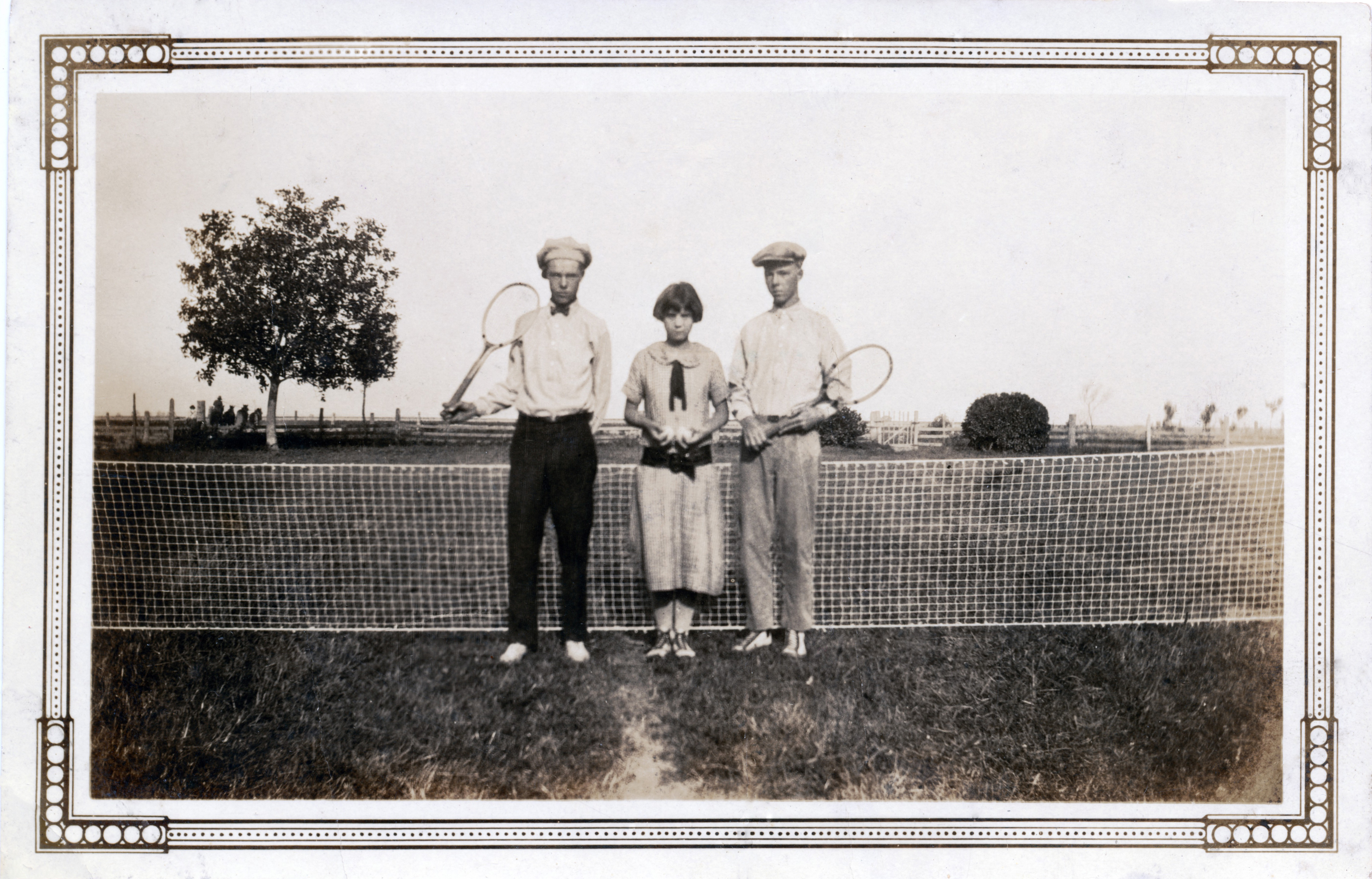
Bucklin tennis circa 1924

I got this photo from my cousin Carla.  She let me know that she had some photos that I might be interested in.  I was thinking it was just a few photos.  Boy, was I wrong!  There were dozens of old Bucklin family photos from the 1920s of my grandfather and his siblings.  What a treasure trove!

Carla and mom (Betty Lou Bucklin Landry) were first cousins and their dads were identical twin brothers.  Carla’s dad was Clarence and my grandfather was Fred.  Since neither of us can tell which one is which in the photo, I’m gonna go with Fred being the one on the left and Clarence on the right.  I don’t know who the girl in the middle is. 

The twins were born on October 2, 1907.  The photo was taken around 1924, so they would be teenagers at that time.  That looks about right.  I know that the family played basketball a lot and I did get some photos of that, but evidently they also played tennis.  Being a fan and a player myself, I was excited to find a picture of them in tennis gear from the time.  Those old wooden tennis rackets look so small, but that wouldn’t be changing for another fifty years or so.  They look like the first racket I had in the 1970s.

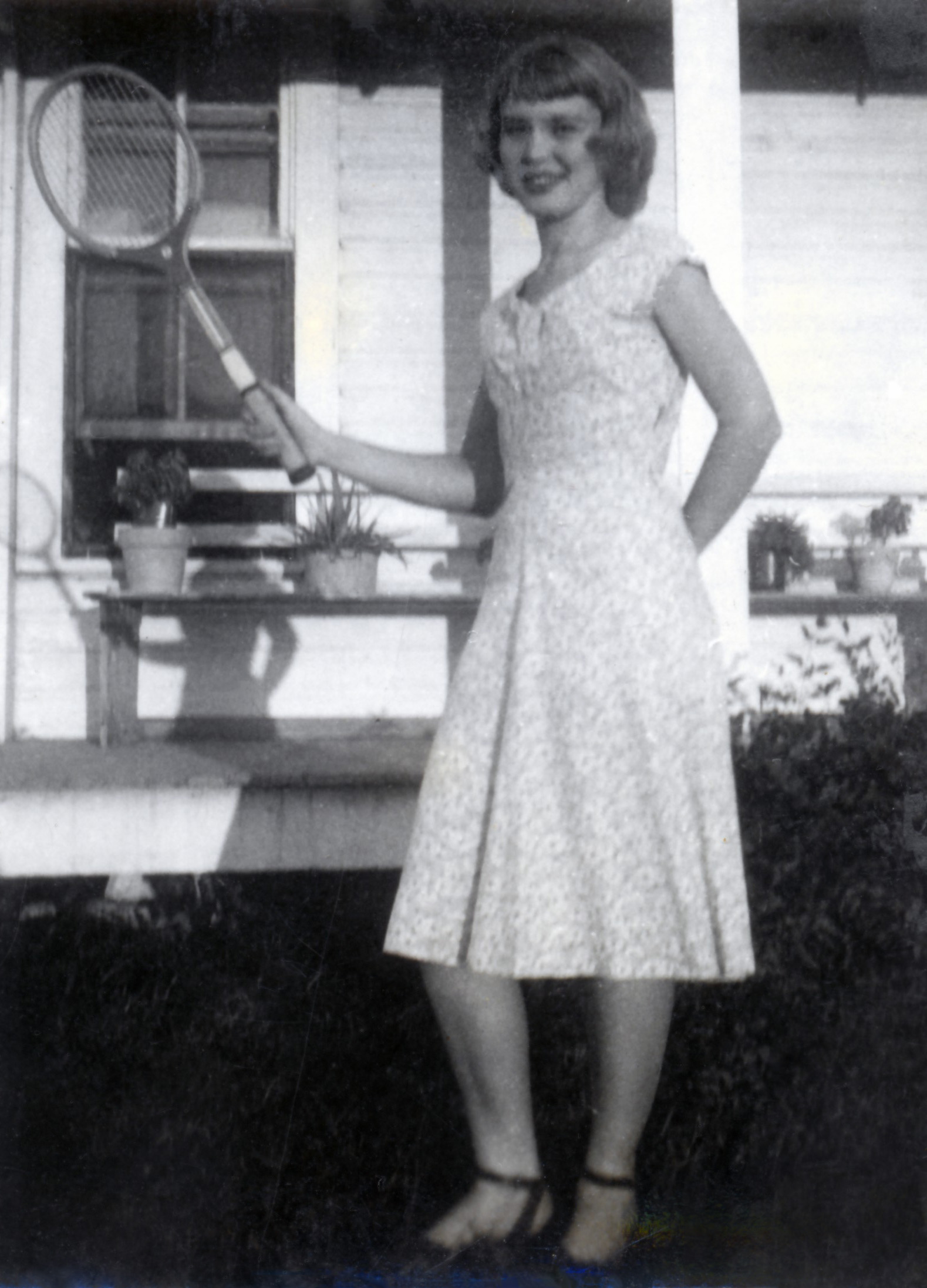
Betty Lou Bucklin circa 1950

They also look very similar to the one my mom is holding in this photo from around 1950.  Though my mom is holding a tennis racket, she is decidedly not dressed for tennis.  I think the tennis racket is just a prop to hold while modeling her dress.  The intent was probably to show off her dress-making skills, not her tennis ones.

I don’t even know if she ever played tennis.  She was a very serious basketball player all through high school and equally devoted to playing in the band.  But tennis?  Not so much. 

The other thing I realized is that the two photos show both my mom and my grandfather at about the same age.  Even though I played tennis a little bit in high school, there isn’t a photo to prove it.  That’s just as well –  I posted a photo of myself at seventeen years old only two weeks ago.

Tennis anyone?