Unbearable Marital Infelicity

I found an article about one of my ancestors about three years ago and was very intrigued by it.  I knew I would write a story about it at some point, I just had to find the right time.  But it seems that there never is a right time when writing about an ancestor’s suicide.

So even though it doesn’t feel like the right time, it does feel like the time to write it.  At least that’s what I’m doing.  The ancestor I’m talking about is John Stanbrough, my great great great grandfather.  Obviously I didn’t know him, but I do think about him from time to time.  There is no photo of him that I know of, even though he did live into the time of photography.  At the time of his birth in 1820, photography was not around.  But during his 57 years of living, it had developed quite a bit.

Let me tell you about my connection to him.  I am the son of Betty Lou Bucklin Landry.  Her father was Fred Bucklin, who was the son of Addie May Hine Bucklin.  Addie was the daughter of Susan Stanbrough Hine.  Sue was the third daughter and sixth child of John Stanbrough & Lydia Mills Stanbrough.   There was an older half brother by her father’s first wife.  She also had six younger siblings.

John Stanbrough was born November 18, 1820, in Clinton County, Ohio.   He was a Quaker.  For a genealogist, that is a good thing because it means that there are lots of records for that person and their ancestors.  The Stanbrough or Stanborough family had been in the US for many generations.  They started out in New York and moved on to Tennessee.  Our line went on to Ohio and then to Indiana around 1830.  Grandma Sue brought our line down to Louisiana in 1894.

John married Lydia Hunt in 1838.  They had one son together in 1839 and then Lydia died in 1842.  Not long after that, John met another Lydia.  This one had the last name of Mills.   They were married on Sept. 20, 1843.  If you added up the children I mentioned earlier, you’d know that they had a dozen children together over about a 20 year period.
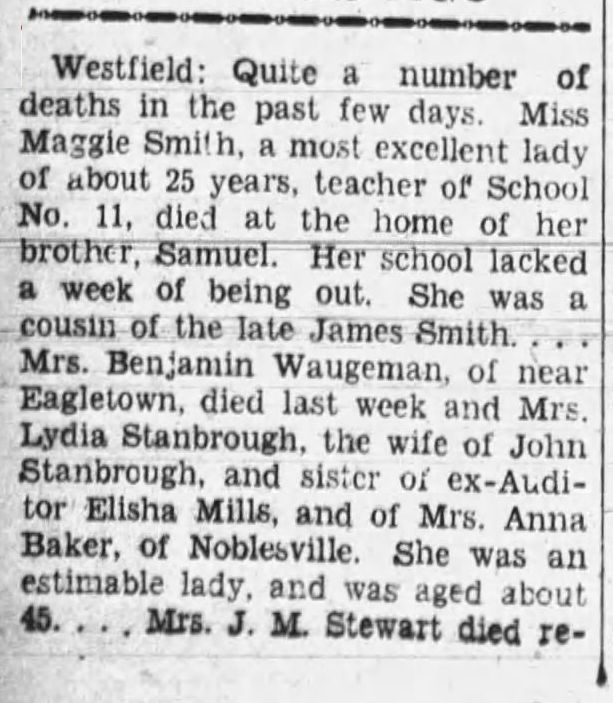
The Noblesville Ledger from March 24, 1873, in Indiana.

Then in 1873, just 10 years after the birth of their last child, Lydia died at the age of 50.  The Noblesville, Indiana, newspaper article incorrectly gives her age at death as 45.  This was the second Lydia that he had lost.   And she was an “estimable lady.”

Later that year, Sue Stanbrough married George Hine and they started a family.  Addie May was born on Sept. 23, 1876, in Noblesville, so there were some happy things going on for John at the time.  He must have gotten lonely again (even with several children in his house), because he decided to get married again in 1877.  He married the widow Margaret Hollis Embree on June 3.  She was 16 years younger and she had six children of her own. 
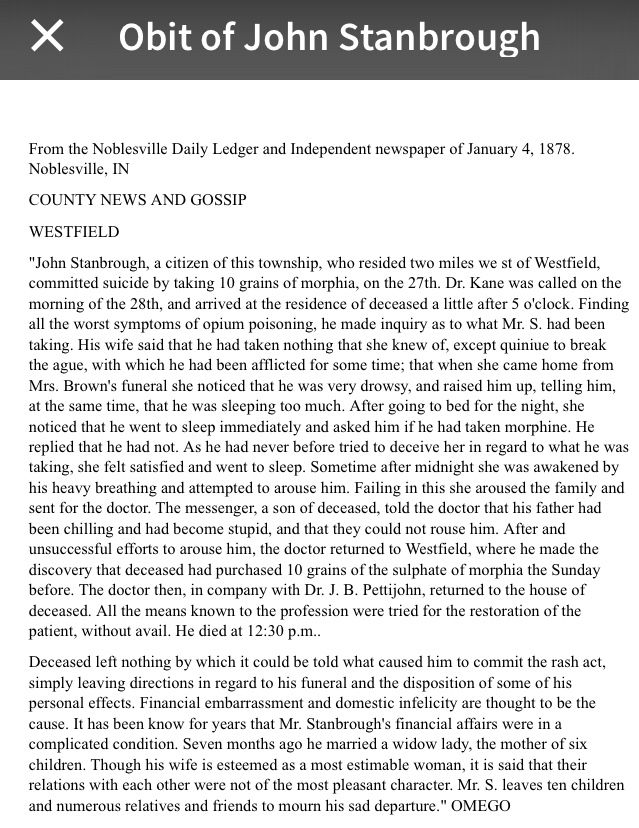
Obituary of John Stanbrough

I had seen a lot of this information before three years ago when I first saw the transcription of the newspaper article about John Stanbrough’s death.  I wonder if his friends and neighbors were surprised like I was to see this information about a suicide?  What would make a recently married man feel that this was the choice he should make?

The article gives a few clues.  John took an overdose of morphine.  He was able to get grains of morphia without any question from a doctor.  He was taking quinine because he suffered from ague.  This condition of recurring severe chills and fever and him taking quinine point to malaria, which is usually accompanied by pain in the bones and joints.  Chronic pain is not an easy thing to deal with.  Yet this was not cited as a possible cause for his “rash act.”

The article does talk about John leaving a message as to how to dispose of his personal effects.  They suspected that his reasons for the action were marital “infelicity” and financial problems.  They point out that he only married his wife seven months ago, that she had six children, and that they didn’t get along particularly well.  Yet she, also, was an “estimable” woman. 

I’m sure this hit Grandma Sue quite hard.  She was living in the same town at the time and her younger siblings were in the house when all of the commotion was going on.  It was a traumatic time for the Stanbrough household of 1877 Noblesville.  I’m sure it was not John’s intention to traumatize his family.  All he could probably see was the pain and problems that he was experiencing.  He likely thought that they’d be better off without him.

A thought that nobody else likely agreed with.

Bobby Landry at Landry Memorial in 1943

Robert Joseph Landry, Jr. was the young 8th grade student in the middle of the photo (the taller one). He was known as Bobby back then. This was at Landry Memorial High School in Lake Charles, Louisiana.

One of my Leveque cousins made a Facebook post yesterday about Landry Memorial High School in Lake Charles.  It inspired me to write my blog about Landry Memorial today, because that’s where my dad and his brothers went to school back in the day.  I remember looking through my dad’s old report cards when I was a kid and wondered about the Landry name associated with the school.  I never really bothered to ask about it back then.  My main concern were the bad grades that my dad made.  He explained them to me by saying that he only studied for enough to pass the class.  That really didn’t help explain it to me.

Nov. 1943, p. 3

But later I found out the history of the school and the connection to the family.  When I was in high school, our family sang at Shakey’s Pizza Parlor in Lake Charles.  On Friday nights I remember there being many students from St. Louis High School that would come to listen to us sing and play for them.  Or maybe they just came for the pizza.  In college I went to St. Louis to participate in various meetings and retreats.

During that time I didn’t realize that St. Louis High had once been Landry Memorial.  I probably wasn’t paying attention when my dad likely told us that he went to school there.  To me, St. Louis was just another high school in Lake Charles.  But I found out differently later on.

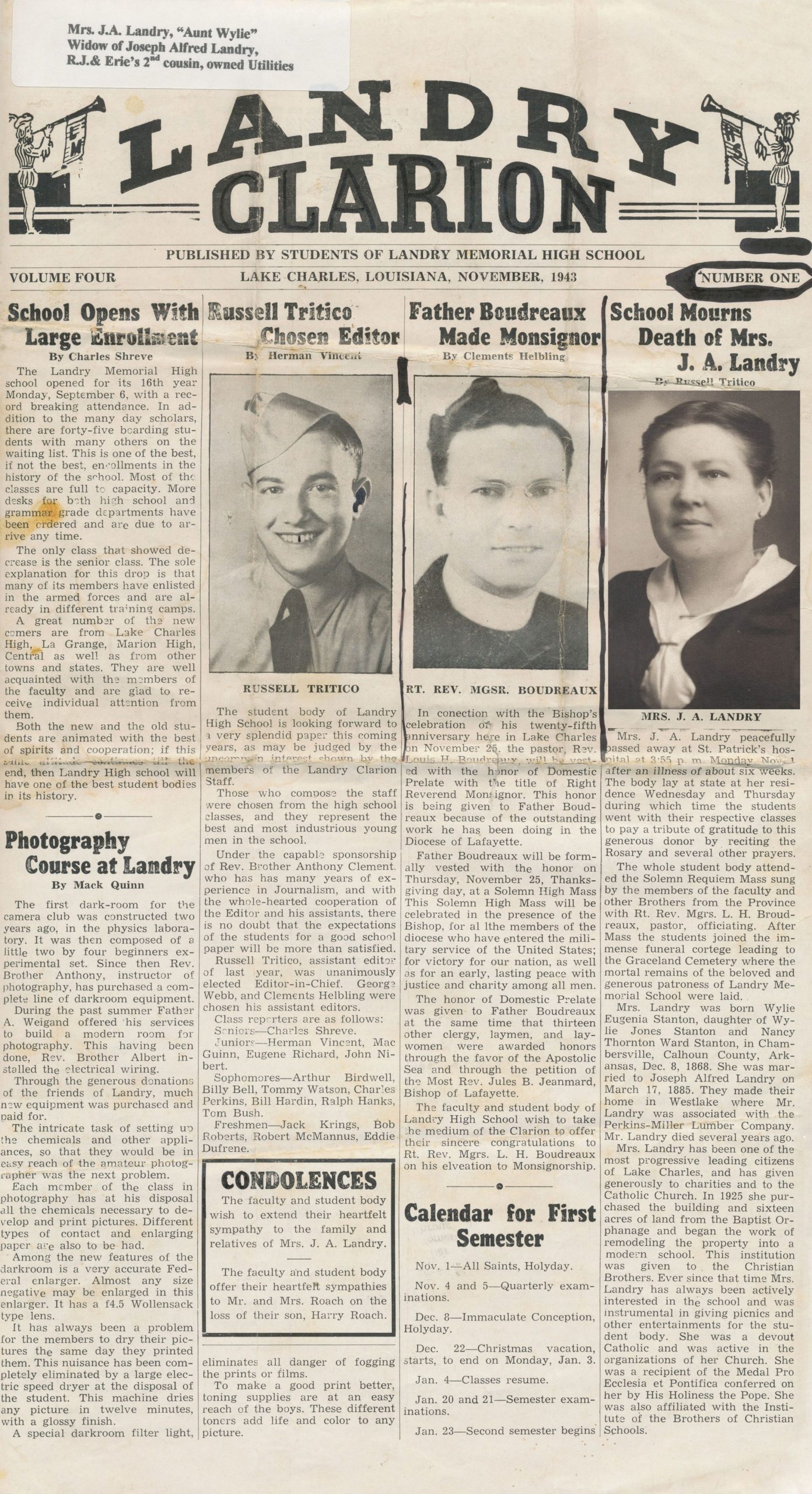
My dad was an 8th grade student at Landry Memorial in 1943.  In the first photo, he is the center student in the middle row.  If you read the information in the second photo (Nov. 1943, p. 3) at the bottom of the first column, they describe my dad.  “Bobby is small but is full of fight.  I am sure that he will turn out to be as good as his brother was, who played center for the Tigers in 1941.”  The brother they were talking about was my Uncle Hubert, who was a few years older than my dad.  I don’t know if their prediction turned out accurately.  All I ever heard about were his musical undertakings.

Nov. 1943, p. 1

But the first page of that old 1943 paper is interesting as well.  It talks about the death of Mrs. J. A. Landry.  She was born Wylie Eugenia Stanton in 1868.  My dad and his siblings called her “Aunt Wylie.”  She used to send her limousine to pick up my dad’s family on Sundays to bring them to church.  It left an impression.  She died on Nov. 1, 1943.

The school talked about her death because she had been instrumental in developing it.  In 1925 she purchased the old Baptist Orphanage on Seventh Street and had it remodeled to operate as a Catholic school for boys.  The school was dedicated as Landry Memorial High School on December 15, 1927, in memory of her late husband who had died in 1923.

In the school newspaper it mentions that J. A. Landry was associated with the Perkins-Miller Lumber Company.  That is true, but he did much more than that.  He was one of the main driving forces in getting modern utilities developed in Lake Charles.  He ran an ice company called J. A. Landry & Co.  Later he had the Lake Charles Ice, Light, and Water Works Company and Lake Charles Railway, Light and Waterworks Co.  He was a forward thinking entrepreneur.  I suppose that’s why his wife dedicated the school in his name.

He was born Joseph Alfred Landry, Jr. to Joseph Alfred Landry and Marie Aloysia Leveque.  He and my grandparents (Pee Paw and Mee Maw) almost have identical family trees.  There seemed to be quite a few Landry and Leveque connections back then.  They were all related to one another in various ways.  The closest connection was that Pee Paw was J. A. Landry’s half first cousin through their Leveque mothers.  

My great grandmother Celeste Leveque Landry was a half-sister to Aloysia Leveque Landry (their mothers were Landry sisters) and Aloysia’s full brother Justinian.  Justinian was the great grandfather of that Leveque cousin I mentioned at the beginning.

Like I said, he was talking about Landry Memorial High School, too.  It’s a family thing.

Birds and Bucklins

My grandparents home in Hathaway, Louisiana, circa 1959.

I found this photo a few years ago in a group of old negatives that I got from my parents.  I don’t really remember ever seeing a print of the photo before that, so it was a nice discovery.  I’ve been planning on using it for a blog post and that time is now.

So I cleaned it up this evening and now I’m sharing it with you.  It’s a photo from around 1958-1960 at my maternal grandparents home in Hathaway, Louisiana.  My grandparents were Fred and Myrtle Phenice Bucklin.  Grandpa is not in the photo, but he left plenty of evidence of his presence.  All of those bird carvings on the wall are his handiwork.  He carved ducks for wall hangings like this and also for decoys for hunting.  I’ve posted some color photos previously that show them, but have never commented on them before.  But how could I not comment?  They are all over that wall!  I wish I had a few of them.  But pictures of them would suffice!  (That is my hint to share!)

Grandma is prominent in the photo.  That is her working on setting the table for a tasty meal that was sure to come, especially tasty if it was followed by her fabled divinity.  She was also a teacher, a singer, an artist, and an organist.  But surely you know those things already if you have been following my blog.  Say “Hi” to Myrtle!

In the front of the photo are my three oldest siblings.  From left to right are Karen, Rob, and Jodie.  They look really excited about the meal to come.  Or maybe it was something else.  In the background on the left, you can see Aunt Sylvia and her husband Ronald Pilcher standing in the doorway.  My mom was Betty Lou Bucklin Landry and Sylvia was her older sister.  They were the oldest two of five children. 

The youngest of the five was Uncle Austin, who can be seen in the center in the back with his head in the clouds.  Not really, it just looks like that because his head was surrounded by birds.  He must have liked that feeling, because later he joined the Air Force and he spent many years working with airplanes.

The last of the subjects in the photo are some of my cousins.  I’m pretty sure they’re the children of Sylvia and Ronald Pilcher.  I’m just not sure which ones they are!  There’s a little boy and a little girl.  It’s either Larry or Paul with Toni or Lynn.  There were lots of grandkids being born during this time.  I don’t see Al, or Kevin, or Brent.  And joining the group soon would be me, Rhonda, Keith, Jamie, and Glen.  Later on would be Charla, John, Dale, and Anita.  We don’t even need to mention Mary. 

There were lots of meals that came out of that kitchen during those holidays.  And there was lots of fun with cousins that followed.  This was just a glimpse into one of those times.


Bonus photo from the same day.  In the back on the left is Aunt Alma, one of my mom’s younger sisters.  Next is my Grandma Myrtle, and Aunt Sylvia.  In front is Rob, who is looking back to the ladies, and Larry, who is looking at the table.  Larry is the boy in the original photo.  Cousin Toni claims the little girl in the original photo is her.

From Acadian to Cajun: Part 5 – Bourg/Granger

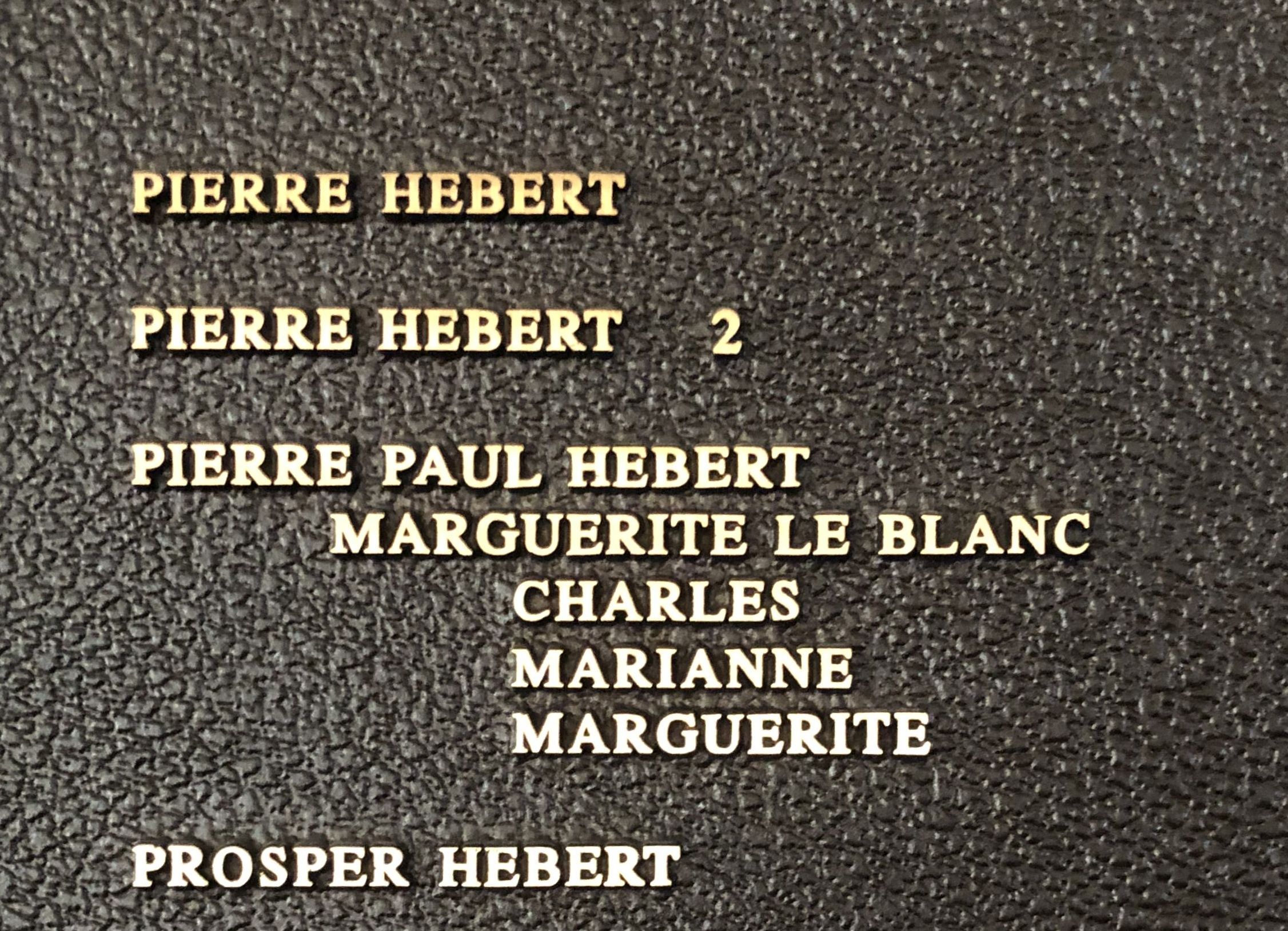
On the Wall of Names in St. Martinville, Louisiana. Included in the Acadian Exiles of Louisiana are Joseph Bourg with his wife Marie Magdelene Granger and family. Their daughter Marie Josephe Bourg was my 5X great grandmother.

So far I have talked about several families that came to Louisiana after being Exiled from Acadie in the 1750s.  I’ve mentioned the surnames Landry, Babin, Breaux, Trahan, LeBlanc, Gautreaux, Aucoin, Hebert, and Melanson.  I’m surprised at how many names there are, and there are more to go.  I’m learning a lot from doing this series.

One of the things I’m learning is all of the roundabout ways that the Acadians made it to Louisiana.  You’d think that they didn’t want to become Cajuns!  But that was not what was on their minds.  The most important thing was survival, and after that was finding family.  The family we are focusing on this time are the Bourg and Granger families.

Joseph Bourg was born in 1733 in St. Peter & St. Paul, Cobequit, Acadie.  He was the youngest child born to 55-year-old Abraham Bourg and his second wife 37-year-old Marie Theriot.  Joseph had an older sister who was 22 years older than he was.  The information about their parents is scarce.  Their deaths are given as “after 1733,” which means that the last record of their life was the birth of their son Joseph.  Joseph was one of those in the last generation of people who lived their childhood in Acadie.  He was a young adult when the Grand Derangement began in late 1755.

He was not among the first groups of Acadians deported from Acadie.  He was either living in or had escaped to Ile St. Jean, which is now known as Prince Edward Island.  Ile St. Jean was still under French rule, so it was a sanctuary for some of the Acadian people.  It was still a time of uncertainty because they knew they could be Exiled at any time.  Yet Joseph did not put his life on hold.  In 1757 he married Marguerite Josephe Dugas.  They only had a short time together in Acadie.

After the fall of Louisbourg in July 1758 to the English, it was decided that the inhabitants of Ile St. Jean were to be Exiled to France along with other Acadians.  Several transport ships were assembled in November, when the Acadians were deported from the only homeland they knew.  They traveled on one of the “Cinq Paquebots Anglais” (“Five English Ships”).  The voyage was met with terrible disasters.  A storm delayed the ships from their intended departure date.  When they finally set out to France, they were met with another storm.  It is believed that some 1300 Acadians were lost at sea during that winter voyage to France.

Joseph was not spared from the suffering.  His wife Marguerite died on the trip, as well as his sister Elizabeth, his brother Jean Pierre, and his sister Madeleine, along with her three youngest children.  A very sad trip indeed.  Yet he did survive, as did his brother Alexandre.  They arrived in St. Malo, France on January 23, 1759.

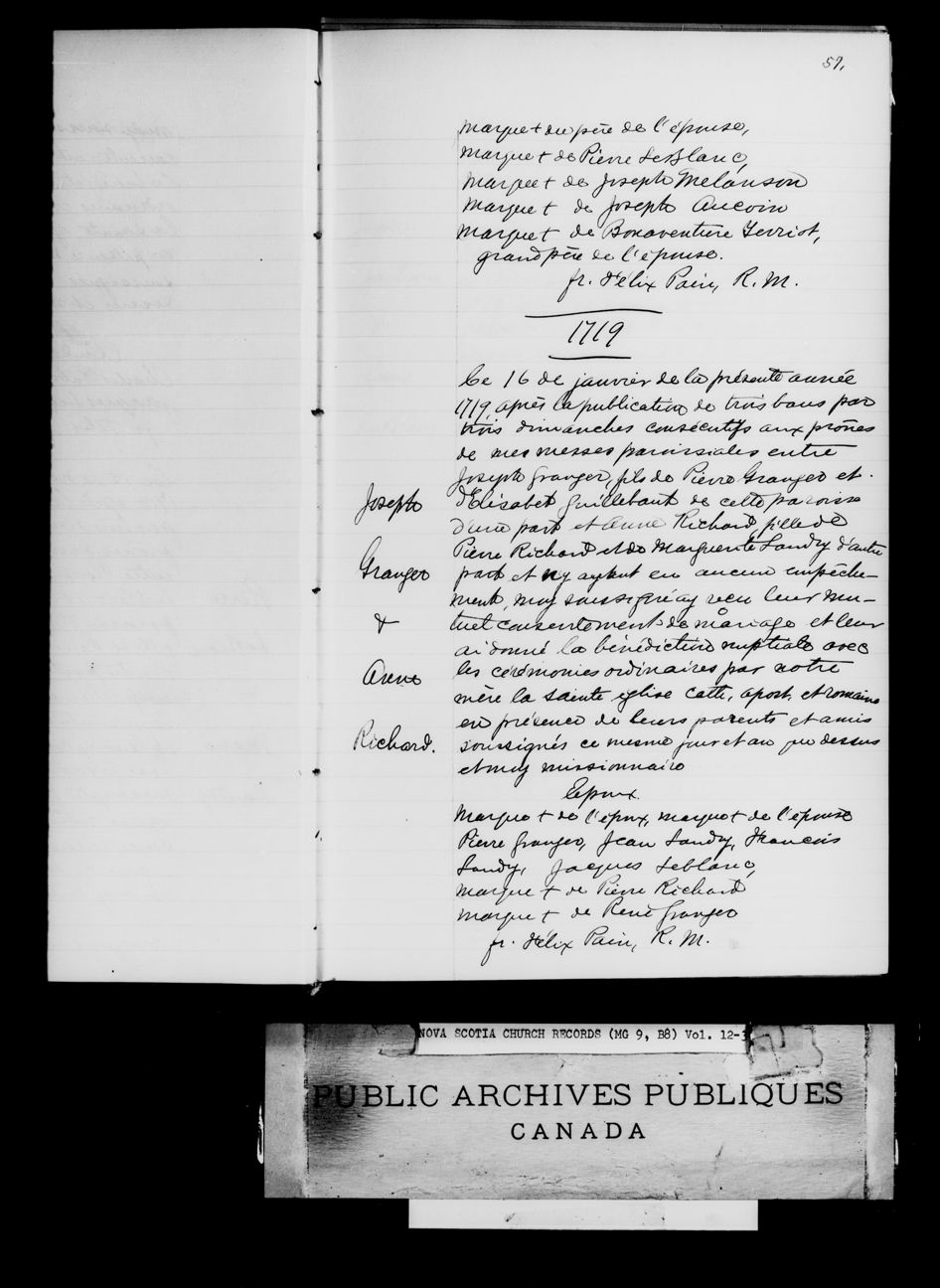
Marriage document from Jan. 16, 1719.

Meanwhile, back in Acadie on January 16, 1719,  Joseph Granger married Ann Richard.  What’s interesting about this marriage is that there are some documents that survived from that time.  Most of the records were destroyed by the British during the Grand Derangement.  But some of them were hidden away and brought into Exile in Maryland.  When those Acadians made their way to Louisiana 12 years later, the documents made it there as well.  Pretty amazing.

Birth record for Marie Magdeleine Granger and her twin sister Anne.

The other interesting thing about this couple is that they had a daughter named Marie Magdelene who I descend from.  She was born in 1731 in Grand Pre, Acadie.  She, too, grew up in Acadie.  In 1750 she was married to a man named Alain Bujold.  In 1752 Magdelene and Alain were living in Ile St. Jean with their 9-month-old son Simon.  They had a daughter in 1756 that they named Marie Louise.  Like others living in that area, they were not deported until the fall of Louisbourg in 1758.

Magdelene was not spared from suffering during the voyage of the “Cinq Paquebots Anglais.”  Little Louise Marie died during the crossing of the ocean.  Her husband Alain’s parents (Oliver Alain Bujold and Madeleine Boudrot) also died on the voyage.  Alain would die within the first month after their arrival in St. Malo in January of 1759.  Less than a month later her boy Simon would die as well.  She must have been surely and thoroughly heartbroken with all of that loss.  She was all alone in a foreign land. 

Do me a favor and read that last paragraph again. (Or read a more detailed account here.) I think Magdelene deserves it.  She was forced from her home and lost everything that was most dear to her.  It must have been devastating.  How could she find the hope and strength to carry on?  I don’t know how she did it, but I know she did.  Otherwise I wouldn’t be here.  So let’s see what she did next.

At some time during 1759 or 1760 Magdelene met (or met again) fellow Acadian Exile Joseph Bourg.  They probably knew each other because they were second cousins from their Landry grandparents.  That did not deter them from getting married on June 30, 1760, in Pleurtuit, Ile-et-Vilaine, France.

In 1761 Magdelene and Joseph had twin sons who they named Joseph and Pierre.  A year later little Marie Joseph came along.  She is my 5X great grandmother.  In 1765 they had another son and they named him Sebastian.  The family was in St. Servan for a while, then moved on to St. Coulomb.  They were following the same path as other Exiles who were trying to form a community in France.  They had two more children, Jean Baptiste in 1768 and Elizabeth Blanche in 1770.  In 1774 Joseph’s brother Alexandre died.

Like many Acadians in France during the Exile, they found themselves in Nantes in  1776.  One of their twin sons Joseph died, and Pierre was married to fellow Acadian Marguerite Dugas.  In 1785 Joseph, Magdelene, and their four youngest children boarded the ship La Bergere headed for Louisiana.  Pierre was on the same ship with his wife.  They arrived in New Orleans on August 15, 1785.  They eventually made their home along Bayou LaFourche.

The last bit of information that I have about Joseph and Magdelene comes from the 1788 census of the LaFourche District.  It shows that Joseph was  the 56-year-old head of a household that included his 54-year old wife Marie (Magdelene) Granger, his 19-year old son Jean Baptiste, and his 18-year-old daughter Elisabeth. He and his family lived on a piece of land with six arpents frontage. They also had a cow, two horses, and four hogs.

Missing in that household was 27-year-old Marie Josephe.  Once again, what happened to her is a story for another time.

Unlike other ancestors in my tree, there is only one path to Joseph Bourg and his wife Marie Magdelene Granger.  It goes through my paternal grandmother Germaine Erie Patureau, or Mee Maw as we call her.


For other installments of this series of blog posts, click on the following links:

From Acadian to Cajun: Part 1 – Landry/Babin

From Acadian to Cajun: Part 2 – Breau/Trahan

From Acadian to Cajun: Part 3 – Braud/LeBlanc/Gauterot/Aucoin

From Acadian to Cajun: Part 4 – Hebert/Melanson

From Acadian to Cajun: Part 6 – Bujol/LeBlanc

From Acadian to Cajun: Part 7 – Foret/Bujol

From Acadian to Cajun: Part 8 – Hernandez/Babin

From Acadian to Cajun: Part 9 – Dupuis/Dugas

From Acadian to Cajun: Part 10 – Bourg/Babin/Landry

From Acadian to Cajun: Part 11 – The Ones That Didn’t Make It

Good-bye, Karen

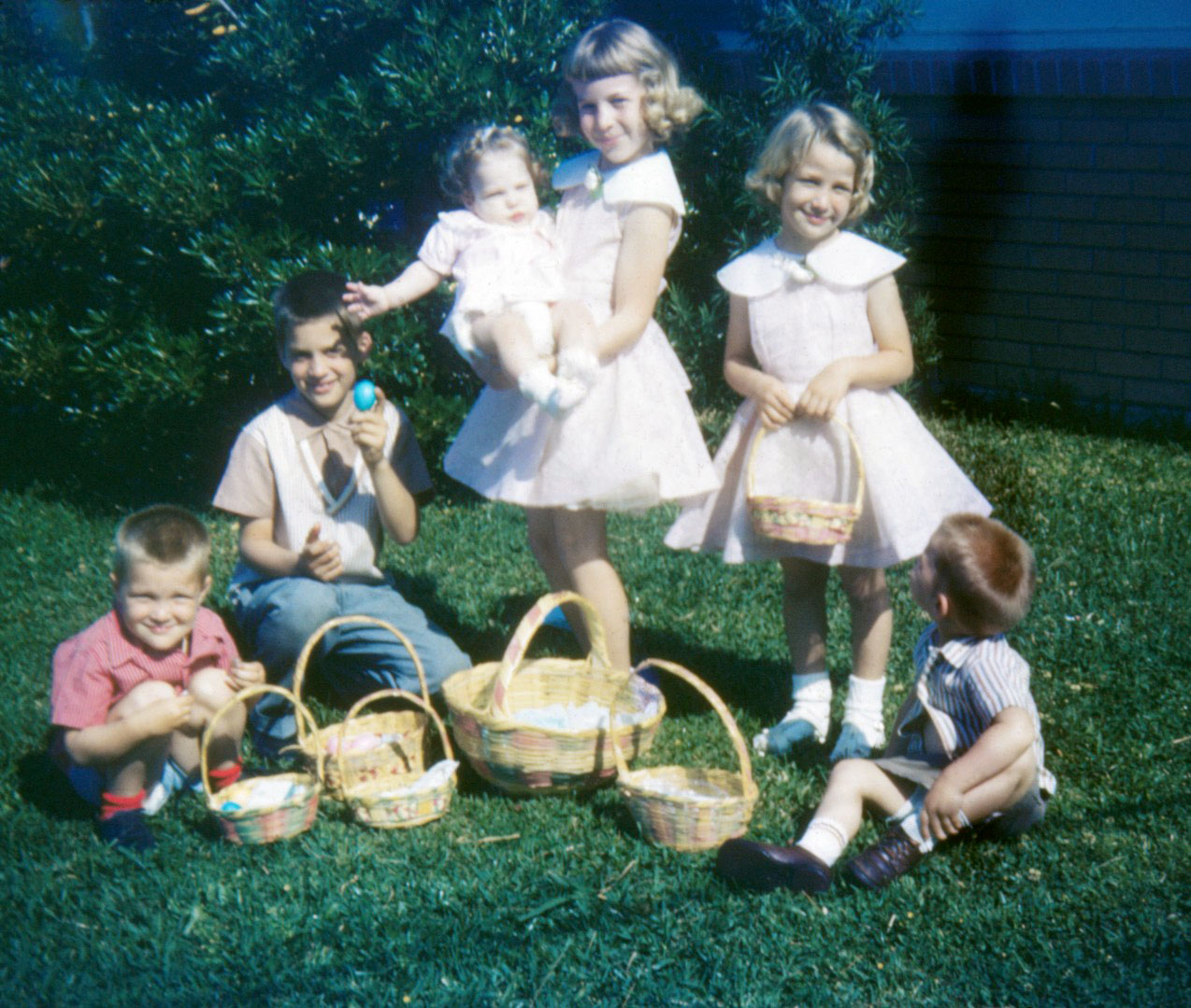
Easter 1963 – The Landry family siblings in happier times. From left to right is Al, Rob, Jamie, Jodie, Karen, and Van.

I was planning on writing a post in my “From Acadian to Cajun” series that I’ve been doing this year.  But then something happened that is so much more important – last night my older sister Karen passed away.

What can you say about a sibling who has passed away?  Nothing seems to be enough.  There is such a long history together.  She was already part of the family when I came around.  It seems like she should still be here, but that’s not the way life goes sometimes.  

She was diagnosed with Multiple Systems Atrophy about three years ago after several things started going wrong.  As the name implies, various systems in a person’s body begin to atrophy.  A person slowly loses functioning in the body over time.  Time that I thought we would have more of.

What I can say about her is that she dealt with her condition admirably.  She always seemed to me to be upbeat and positive.  She was a sweet and loving person.  Saying that sounds trite, but it is true.  She was a peaceful soul.  She will be missed.

Good-bye, Karen.


The Word is Hydroxy…

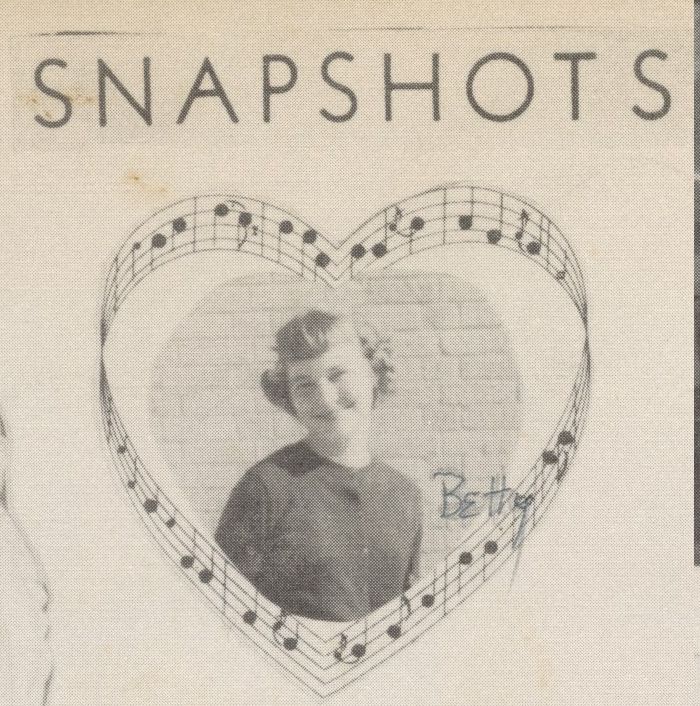
Snapshot of Betty Lou Bucklin in the 1949-50 yearbook for the Hathaway High Hornets in southern Louisiana.

I’ve thought about writing a post about this topic for quite a while now, but I have to admit that it is a really weird topic.  But lately I keep hearing the word hydroxycholoroquine in relation to possible medical treatment for Covid-19.  Every time I hear the beginning of the word, it reminds me of one of my mom’s favorite words. 

I can’t remember the first time I heard the word.  I seem to think it was back when I was learning the word supercalifragilisticexpialidocious in 2nd grade or so.  I’m sure we must have been learning the song for school choir or something like that.  So my mom must have decided to tell me about her favorite word.  That favorite word was hydroxymercurobenzolphenonasulfate.

So I learned that word and have remembered it ever since then.  And now lately I’ve been thinking about it more often.  It’s not a word that comes up in conversation very often, if ever.  I assumed it was a word she might have heard in a science class or something.  I have tried to find out what it means or what its purpose is, and I’ve only been able to find one reference to it.  And it wasn’t online anywhere.

A note to Betty Lou from Flutina. Hathaway High School, Hathaway, Louisiana, 1949.

I found it in my mom’s old yearbook from 1949-50.  It was a message written to Barry Tone c/o Miss Betty Lou Bucklin.  (It’s a play on words.  My mom played the baritone in band.)  The message was from one Flutina the Flute.  I don’t know her identity, but her message says, “Dear Barry, They say life is hard.  Don’t let its problems get you down.  If they do, I advise the quick way out – Take some hydroxymercurobenzolphenonasulfate.” 

My only thought about it when I found it was that it was just a cute little phrase that mom and her friend joked about.  Kinda like “Wheatavitavegimin, it’s tasty!”  I didn’t think it was anything dark –  my mom taught me the word when I was a wee lad!  But when I showed it to Chuck to tell him what I was going to write about tonight, he thought it was a bit dark.  He’s right!  How did I never see that before.

Then when I looked it up online, the closest results came up with poisons and an icon with skull and crossbones.  Oh my!  I decided to write about it anyway.  Did I tell you that it was one of my mom’s favorite words?  I’m sure I did.  And I like it too!  And I know for sure my mom was not trying to encourage me to harm myself in any way.  It’s just a fun word to say.  Try it.  Hydroxymercurobenzolphenonasulfate!  See?  No harm in saying it.

Hathaway school band circa 1950

I’m still curious to know who Flutina the Flute is.  I have a photo from that yearbook and it shows a picture of the Hathaway school band.  My mom labeled a few people in the photo.  She is in the photo, as well as her sisters Alma and Loris.  She also labeled Gayle (Groth I presume).  And there on the back row is Flutina the Flute.  Of course, she is playing the flute, but I don’t know her real name. 

But I think I might know one of her favorite words!  You think?


My Dad’s Maternal Line

I try to switch back and forth between my father’s side of the family to my mom’s side of the family.  It’s only right that I give them equal time.  Plus I have stories to tell about both sides of the family.  Then I try to cover each of my grandparents’ lines about once a month.  But then a great story will come along and throw everything off, because I just have to share it with everyone.

So according to my figuring, it is time to write a Patureau post.   I looked through my info and decided on a story of my dad’s maternal line.  The only problem with that is that when you follow the maternal line, the surname changes every generation.  But my dad’s line is unusual.  He was a Bob Landry and his mother was Germaine “Erie” Patureau.  His grandmother was Marie Therese Landry.  His great grandmother was Marie Amelie “Belite” Bujol.  Belite was the daughter of Anna Adele Landry.

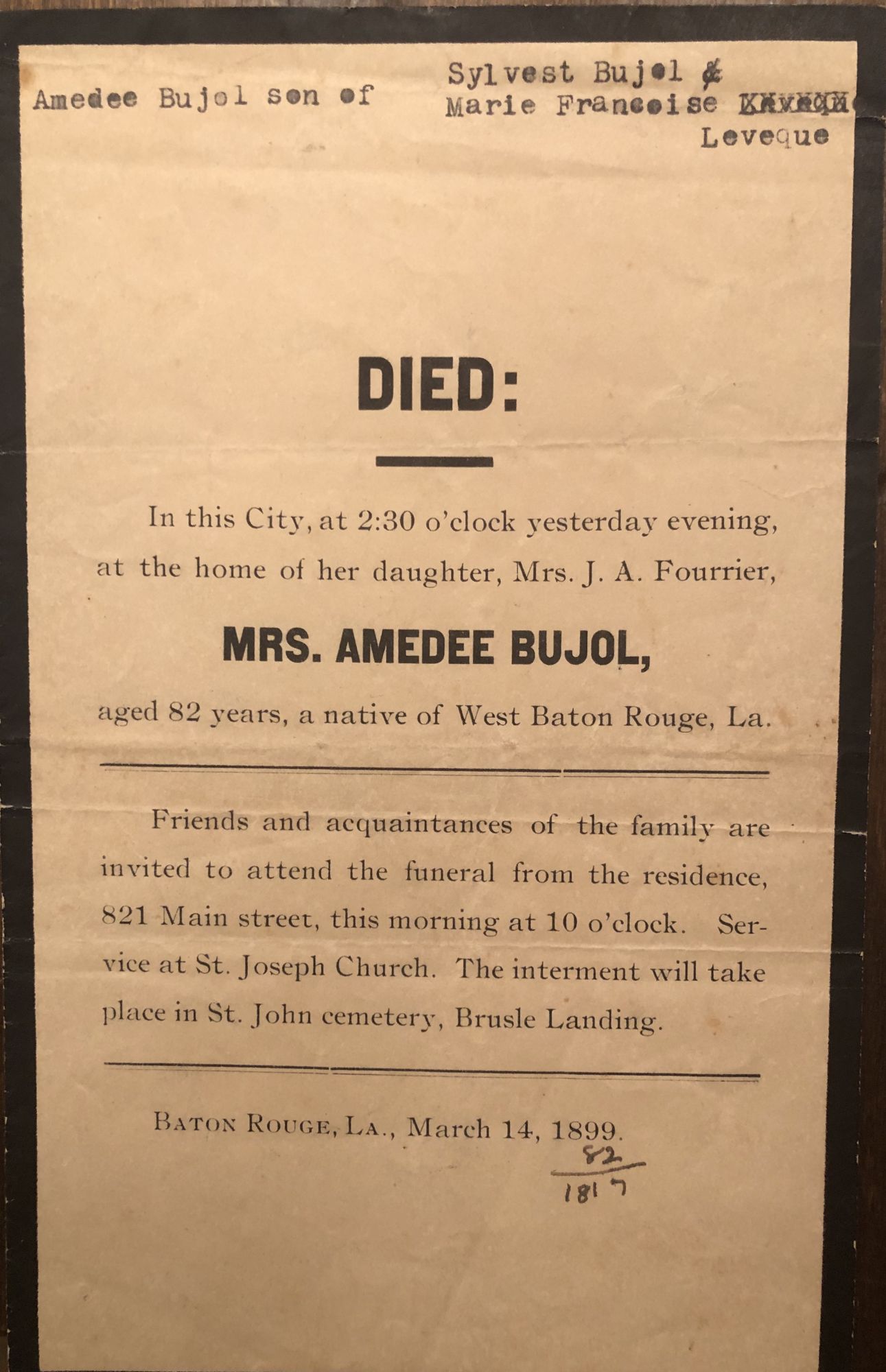
Death notice for Mrs. Amedee Bujol on March 14, 1899

So how is that for a Patureau story?  It’s full of the Landry name!  I shouldn’t be surprised, because everywhere you look in his tree you’ll find a Landry.  But then again, almost all of the Patureau families in southern Louisiana, Texas, and beyond descend from a Landry.  The Patureau immigrant Ferdinand Patureau was married to Marie Emma Landry, the half first cousin to Anna  Adele Landry.  So we’re all one big happy family anyway.

The impetus for this post is this death notice that I “found” last year.  Actually it was shared with me and other cousins by our cousin Daphne – she of the “Secret Collection.”  The death notice only identifies the deceased as “Mrs. Amedee Bujol,” with no indication of her first name or maiden name.  Then at some later date someone (my grandma Erie -better known as Mee Maw – or my dad) typed in more information.  But that information is only more facts about Amedee Bujol and not about Mrs. Amedee Bujol.

Well let me tell you who Mrs. Amedee Bujol was.  She was Anna Adele Landry.  She was born on June 21, 1817, in St. Gabriel, Louisiana.  Her parents were Manuel Landry and Celeste Bruneteau.  When she was 22 years old, she married the infamous Amedee Bujol (full name Joseph Hubert Amedee Bujol) and took his name.  Over the next thirteen years they became the parents of ten daughters in a row!  Finally in 1856, they gave birth to a son.  Amedee died the next year from exhaustion!  Not really.  He did die, but I don’t know what the cause was.  He was buried in Brusly, leaving Adele a widow with nine small children.  (Twin daughters had died in infancy in 1851.)

In the 1860 Census she was listed as “Widow A. Bujol” in the household of “Leveque & Bujol” in Iberville Parish.  It identifies Leveque & Bujol as planters, but there was a Louis Leveque in the household and he was a lawyer.  He was a first cousin of Amedee Bujol (his mother was a Leveque) and it looks like he may have been in business with Adele.  So they had a plantation or worked with a plantation in pre-Civil War times.  But the war was not too far off.

On April 26, 1861, Brusly had a big celebration with their citizens to cheer on those young men who were going off to fight for Southern Freedom.  There were bands playing and crowds cheering as the military men showed up with their new uniforms and armament.  Adele Landry Bujol (known as the Widow or Veuve Bujol) played a part in that celebration.  She and some of her “beautiful” daughters sewed a new company flag for the Acadian men of the Tirailleurs.  Her daughter Amelie “Belite” would later marry one of the war heroes from the Tirailleurs – Trasimond Landry.

My dad’s family tree showing maternal line to Anna Adele Landry Bujol

In the 1870 Census, Adele is listed as “Amedee Bujol,” a 52 year old female with three daughters, one son-in-law, and a domestic servant.  I can see being called the Widow Bujol, but it seems strange that she would be known by her husband’s name years after he died.  Finally in 1880, she is listed as Adele Bujol when she was living with her daughter Belite and Belite’s second husband Magloire Babin.  Belite did not stay a widow for very long like her mother had.  In fact, Trasimond died in Feb. 1879 of yellow fever and Belite gave birth to a child by Magloire Babin on May 31, 1880.  So she was married at least within seven months of Trasimond’s death.  Not that there’s anything wrong with that.  It’s just such a difference from her mother being a widow for 43 years and her grandmother (Marie Francoise Leveque Bujol) being a widow for 51 years.

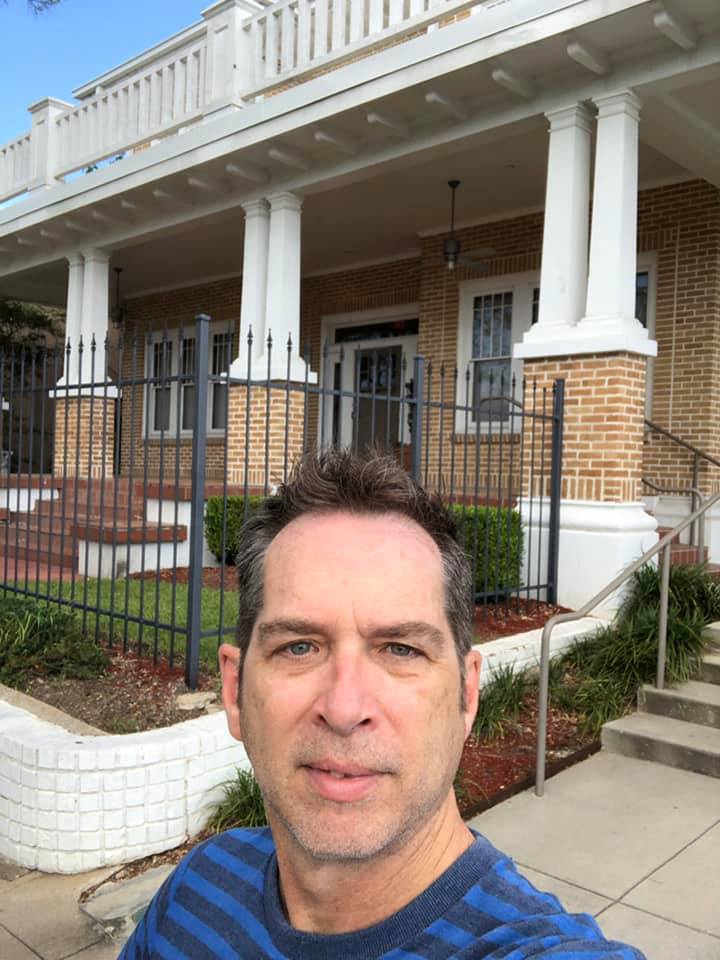
Before I found that death notice for Adele last year, the 1880 Census was the last record I could find for her.  So for her death, all I could know for sure was that it was “after 1880.”  So I was excited to finally find the exact date of her death.  It looks like she died on March 13, 1899, at the house of her daughter Mrs. J. A. Fourrier (nee Anaise Amenide Bujol) at 821 Main Street in Baton Rouge, Louisiana.  That’s not far from where I live.  She was buried across the river at the Catholic Cemetery in Brusly.  I would think she would be buried near Amedee.  I found his grave at the Brusly cemetery, but didn’t see hers. 

So ends my story of Mrs. J. H. A. Bujol.


March 27, 2020 – I went by the address where great great great Grandma Adele took her last breath.  This is not the house that was there in 1899, but it is the same location.

“Howdy, Y’All”

Betty Lou just a swingin’

How can you not like this photo?  Right?  Such a cheerful little photo.  I think I may have posted this photo before with another one as a comment on a blog post.  I thought it was time for it to have a blog post of its own.  Being that we are right in the middle of a coronavirus lock-down, I thought something a bit cheery was in order.  That “middle” definer in that last sentence might be a bit optimistic as well.  We shall see.

If you don’t already know, this is a photo of my dear sweet Mama.  Funny how that phrase reminds me of something so particular.  When I was in college, I went home one weekend.  Part of that weekend included washing my clothes.  I’m pretty sure that she was the one doing the washing!  The next week I put on a shirt and noticed something in the pocket.  I fished out a stick of gum that had a note attached that read, “From your dear sweet Mama!”  That’s my mom, a sweet one for sure.  I saved that little note, though I haven’t seen it in a while.  If I ever find it again, I’ll have to add it to this post.

So as I was saying, this is Betty Lou Bucklin Landry.  She was born in Hathaway, Louisiana, on May 20, 1933, with Dr. Fletcher from Elton in attendance.  At the time that this photo was taken, she was around 17 years old.  She was either a junior or senior in high school at Hathaway High.  Go Hornets!  She’s sitting on a swing in the china ball tree next to the old ice box.  Her dad Fred Bucklin had a plant nursery back then and you can see part of that in the background.  Just a quiet day in little old Hathaway in the early 50s.

When I first started writing this post, it looked like she was saying a big hello.  Now it looks like she is saying, “See you later!”

From Acadian to Cajun: Part 4 – Hebert/Melanson

Paul Hebert and Marguerite Melanson were my 5X great grandparents who came to Louisiana from Acadie via Maryland.

It’s time for another installment of the series about my ancestors who went through the Grand Derangement.  This was when the French-speaking inhabitants of Acadie were Exiled from their homeland by  the British.  The year was 1755 and there was a war going on between England and France.  So this made the English leery of those people who spoke funny and followed the Roman pope.  They were just altogether different and not to be tolerated.  So off they were sent with minimum belongings and maximum uncertainties.

Pierre Paul was the son of Paul Gaston Hebert & Marguerite Josephe Melanson.

The family line I’ll talk about this time is the most common Acadian/Cajun surname in Louisiana – or so I’ve been told.  I’ve always thought that the Landry name was the ‘Smith’ of southern Louisiana.  But I’ve been corrected by some of my Hebert kin.  It seems that the Hebert name is the most common.  But that’s okay with me.  I once said that I am a Patureau.  Well, now I am saying, “I am an Hebert.”  Let’s look at that connection.

Record of the 1736 marriage of Paul Hebert & Marguerite Josephe Melanson. The title of the entry shows Marie Josephe Melanson, but the body of the entry shows the correct name of Marguerite Josephe Melanson

 On April 13, 1712, my 5X great grandfather Paul Gaston Hebert was born in St. Charles Aux Mines, Acadie.  His parents were Guillaume Hebert and Marie Josephe Dupuis.  On November 6, 1718, my 5X great grandmother Marguerite Josephe Melanson was born in Grand Pre, Acadie.  Her parents were Phillip Melanson & Marie Catherine Dugas. 

Paul and Marguerite  grew up in their parents’ households in Acadie before the Great Upheaval, as did several generations of their family before them.  Their great great grandparents had founded Acadie a hundred years previously.  Many generations had been born there and died there. Marguerite lost her mother in 1733, and she would be the last of this line to be buried there.  This also meant that her mother was not present when Marguerite married Paul on May 14, 1736, in Grand Pre.

In 1737 Marguerite and Paul had their first child, a son named Pierre Paul.  He was my 4XG grandfather.  Another son Joseph was born in 1739 and I don’t descend from him.  In 1745 they had a daughter named Anne Marie.  I descend from her.  Twice.  Oh, no.  That’s not right.  I descend from her three times through her two husbands.  But now I’m getting ahead of myself.

Marguerite and Paul had a total of nine children before the Grand Derangement in 1755.  The names were Pierre Paul, Joseph, Charles, Marie, Anne Marie, Ignace, Madeleine, Jean Baptiste, and Armand.  Considering some of my ancestors that were deported to Virginia and consequently to England where there was lots of disease and disasters, the Hebert family was fortunate to be sent to Georgetown, Maryland, for their period of Exile.  It was still no picnic in the park and I wouldn’t wish their treatment on anyone that I know.  They were expelled from their homes and shipped to an unwelcoming foreign place.

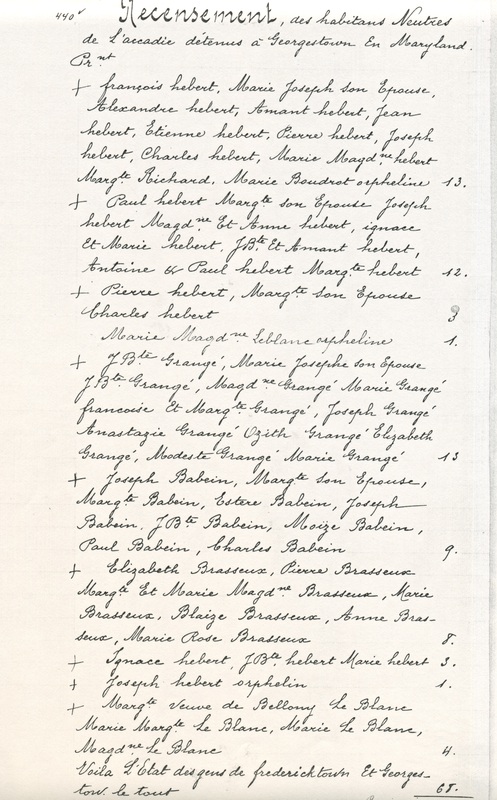
1763 Georgetown, Maryland, Census

And yet the family continued to grow.  During their first five years of Exile in Maryland, Marguerite and Paul had three more children:  Antoine, Paul, and Marguerite.   They had their youngest child in 1760, which was the same year that their oldest Pierre Paul got married.  He married a fellow Acadian Exile by the name of Marguerite LeBlanc.  I’m not certain of her parents, but I think their names were Antoine LeBlanc and Marie Babin.  I do know that Pierre Paul and Marguerite had a son named Charles in 1762.

So when the 1763 Census in Georgetown was taken of the French Neutrals, there were lots of Heberts to be found.  That is easy to see from the list of names.  The first group of names starts with Francois Hebert.  He was a first cousin to Paul Hebert.  Francois’s wife Marie Joseph Melancon was first cousin to Paul’s wife  Marguerite Joseph Melancon.  The next group listed is Paul and Marguerite.  Then there is Pierre Paul, Marguerite, and their new little son Charles.  The next three families listed are a Granger, a Babin, and a Brasseux.  The next one listed is Ignace Hebert, who is a brother of Paul.  The last family group on this page starts with the name Marguerite veuve Bellony LeBlanc.  That means that Marguerite was the widow of Bellony.   She was the sister of Paul Hebert, which shows that there were many family members present with them in Georgetown.

There is not much more information about their term of Exile in Maryland.  There is a marriage registered by Rev. Joseph Mosley in his journal.  It reads “26 Dec. 1765 (Thu) married Joseph Hebert and Anne Mary Landry; witnesses John Blake, Mrs. Witherstrand, and many French; second and third degree dispensations.”  That would be Paul Hebert & Marguerite Melanson’s son Joseph.  I think the dispensation was due to fact that the two lovebirds were cousins through the Melanson family name.  I’m sure that did not deter the “many French” from passing a good time!

When we next hear of this family group, they are among the Acadian Exiles who settled in St. Gabriel, Louisiana, on July 27, 1767.  According to the records, they owned one axe and two trunks.  Really?  Couldn’t they fit that axe in one of those trunks?  That just tells me that they weren’t very good packers!  Or maybe there was some significance to the axe that I’m not aware of.

In 1769 Anne Marie Hebert was 24 years old and at a good age for marrying.  So when she met another Acadian Exile who had settled in Louisiana, that’s just what she did.

But that story is for another time.

_____

Here is my family tree showing the shortest link to my Hebert ancestors.


For other installments of the “From Acadian to Cajun” series, just click on the following links:

From Acadian to Cajun: Part 1 – Landry/Babin

From Acadian to Cajun: Part 2 – Breau/Trahan

From Acadian to Cajun: Part 3 – Braud/LeBlanc/Gauterot/Aucoin

From Acadian to Cajun: Part 5 – Bourg/Granger

From Acadian to Cajun: Part 6 – Bujol/LeBlanc

From Acadian to Cajun: Part 7 – Foret/Bujol

From Acadian to Cajun: Part 8 – Hernandez/Babin

From Acadian to Cajun: Part 9 – Dupuis/Dugas

From Acadian to Cajun: Part 10 – Bourg/Babin/Landry in a short story called “Finding Home”

From Acadian to Cajun: Part 11 – The Ones That Didn’t Make It

Addie May WIth a Son and a Cow

Roy Bucklin with his mother Addie May Hine Bucklin discussing cows.

For some reason I always seem to like photos of cows.  I also like paintings of cows.  So when I come across a photo of an ancestor with a cow, you know I’m gonna like it.  I’ve already posted a photo of my paternal great grandfather with a cow.  That’s because Grampa Max (Patureau) was a veterinarian.  Now it’s time to share a photo of my maternal great grandmother with a bovine companion (or two).

Addie May was her name, and cattle was her game.  Grandma Addie was born in Noblesville, Indiana, on Sept. 23, 1876.  Her parents were George and Sue Stanbrough Hine.  In the 1880 Census, George is identified as a farmer in Marion Township in Boone County, Indiana.  So little Addie grew up on a farm, which probably had at least a cow or two.

Farm journals of Louis Bucklin

The family moved to Louisiana in 1894 where George continued his farming on a homestead in the China community.  Addie met and married (in 1898) Louis Bucklin, whose family had been homesteading in the area since 1884.  Louis kept a journal that talked about all of the goings on at the farm.   He started them in 1893 and continued writing until his death in 1927.

Addie continued the farm and raised cattle with her sons Roy and Herbert.  I don’t really know that much about it, but I have seen newspaper articles that mentioned them showing their cattle and winning prizes at the Jeff Davis Parish Fair as well as regional showings.  I can’t find any of those articles right now, but I promise you there are several.  I know that Roy’s daughters Jeannette and Doris also got in on the act and made a name for themselves.

Van, Bob, and Betty Bucklin Landry visiting the old Bucklin farm truck of Addie Hine Bucklin in 2015. (Thanks to cousin Joseph for the photo.)

Addie died in 1960 a month after I was born.  Her sons Herbert and Roy took over the farm, as well as the truck that Addie used to drive to take care of her farming business.  That truck has long since retired, yet it is still around.  It is used as part of a stage in a cool barn in the Hathaway area.  I went to visit it with my mom and dad back in 2015 for one last nostalgic outing with them.

Nostalgic indeed.

1 31 32 33 34 35 58