A Cherished Photo of Pee Paw

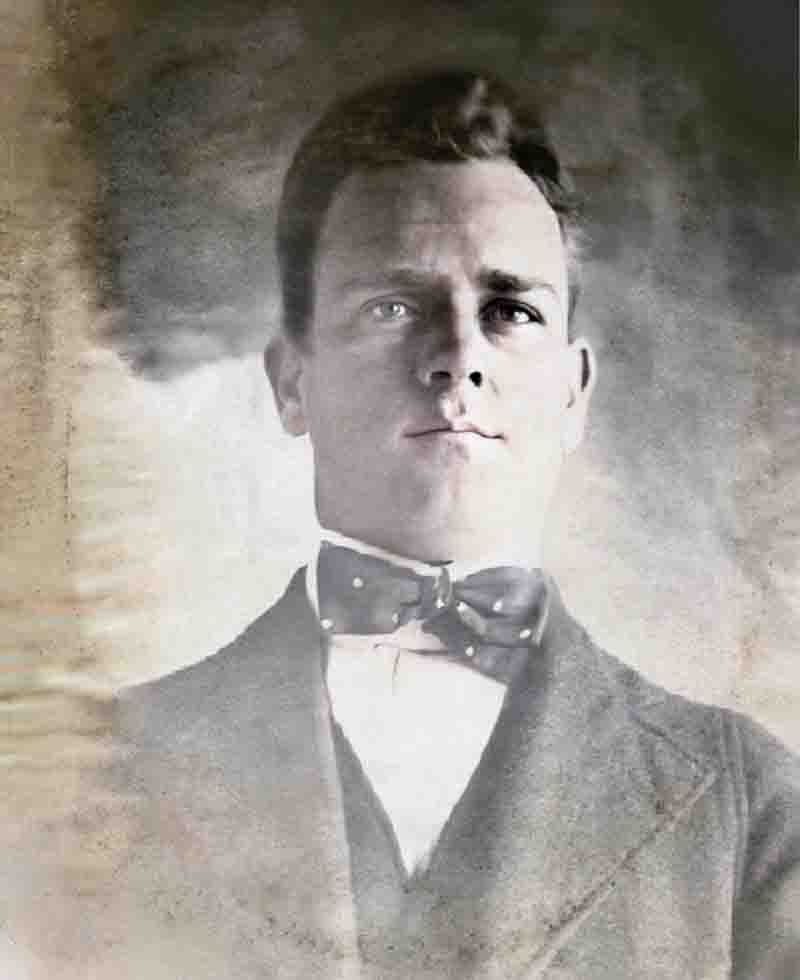
Robert Joseph “Rob” Landry, Sr. circa 1922 in Lake Charles, Louisiana.

Here is a photo that I found last week.  I’ve had it in my digital files for quite a while, but I don’t remember seeing it before last weekend.  How is that for a cherished photo?  The date on the file was 1999.  Daddy must have scanned it or somehow had a digital file made of this old photo of his own dad.  I could tell that the original photo must have been really good, but all I had to start with was a small washed-out image.  I knew as soon as I saw it that I had to share it, but it had some work to be done on it.

So that’s what I did.  And yes, this is the improved version of the photo after healing, cloning, shading, leveling, and fading one version over another for about an hour.  I left some of the staining along the left side of the photo because I wanted to keep some of that old time charm.  Actually, I wanted you to be able to see that there is an oval shape around the face of my grandfather.

I’m pretty sure the oval is a result of the original enlarged photograph having been in a frame for a long time.  I’m sure that my Mee Maw – Germaine Erie Patureau Landry – must have been the one that framed this cherished image of her dear husband.  (My spellcheck is telling me to change that spelling to “dead” husband!  That was not what I wanted to convey!  I’m pretty sure she cherished him when he was alive!)  He does look quite dashing in the photo.  I’m hoping that someone else in the family might have an original of this photo.  It would be nice to get a better copy of this photo.

Robert Joseph “Rob” Landry was born in Westlake, Louisiana, on January 9, 1893.   He was the youngest of the ten children of Simon Alcide Landry and Marie Celeste Leveque Landry.  The family had moved west from West Baton Rouge Parish a few years earlier to find work in the railroad industry of Calcasieu Parish.  He grew up in Westlake, where he developed his interests in fishing and baseball.  As a young man he was a semi-professional baseball player in Louisiana and Texas.  In 1917 he joined the military during the Great War (WWI).  He went through training, but the war ended before he was ever deployed abroad.  

In 1921 he married Germaine Erie Patureau from Plaquemine, Louisiana.  I’m thinking the photo was taken around that period of time or shortly after.  He still looks like a young man, but he’s starting to show some features of his older years.  It didn’t take too long for his hair to start thinning, so I don’t think he was much older than 29 or 30.  It’s a good photo.  I’ll definitely keep it.  I’ll probably even cherish it.  I hope you do, too.

Louis Bucklin With Two Eyes

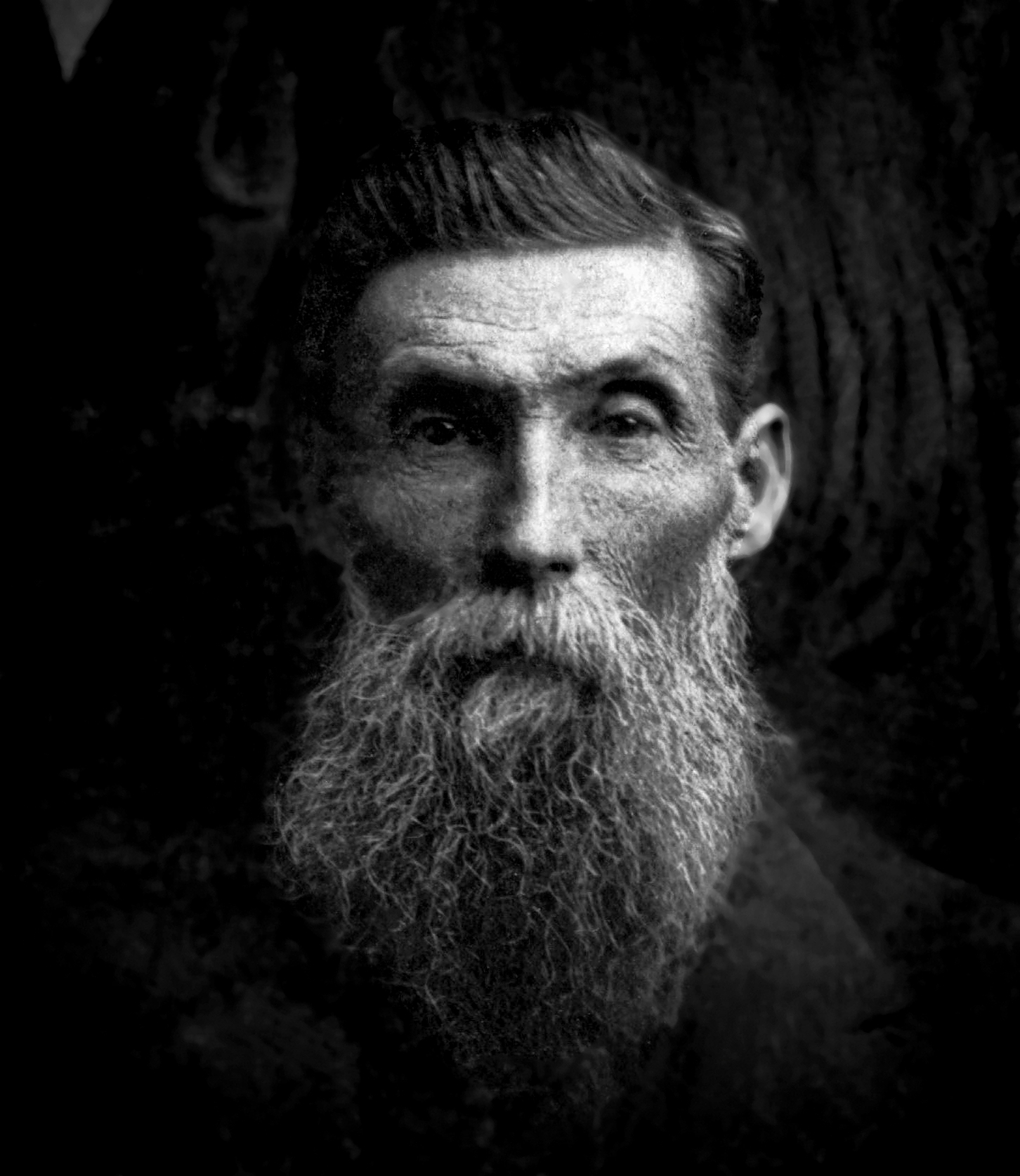
This title is making me laugh.  It probably shouldn’t.  I sometimes laugh inappropriately at things.  But I can’t help it, I find so many things funny.  And it’s not funny that later in life, my great grandfather Louis Bucklin lost one of his eyes.  I’m pretty sure it was a result of a farming accident.  He was a farmer after all.  He was also a writer.  He kept journals for many years.  I have not read them all.  I don’t think that I’ve seen them all.  I’ve only seen a photo of a grouping of old journals that he wrote, and it looked like there were a lot of them.

Drawing of Louis Bucklin from circa 1900. I enhanced the photo.

He wasn’t too revealing about his personal life in those journals.  He didn’t write about the young girl he was interested in who was living in Leeds, Iowa, in 1893.  I only know about that because he must have saved the letter that she wrote to him to break up with him.  That letter didn’t stay in the Bucklin family, but it somehow was kept in the Keys family.  Fortunately, his son married into the Keys family and the letter survived until it came back to me.  It led to all kinds of discoveries about Louis and his brother Joe.  I’ve written all about that previously.

Louis also didn’t write about his interest in Addie May Hine, who later became his wife.  All he really said in his journals was that Addie had come to the house to help his mother Mary Ann McGrath Bucklin do some household chores.  I guess that’s something.  She did merit a mention.

The journal also comes in handy when people ask questions about some of the history of the Hathaway, Louisiana, area.  He mentions a few people and some events that happened.  He was in a play in Jennings, Louisiana, on May 20, 1894.  I don’t know the name of the play, but he felt it would have gone better if they had been more organized and better practiced.  He pointed out blunders by a Hoag and a Macmartin.  A few weeks later he talked about an impromptu Fourth of July celebration in China, Louisiana.  China is another small community north of Jennings.  He was particularly impressed with the speeches of Mr. Powell and Mr. Eaton.

I don’t know when Louis lost his eye.  I don’t know if that information is in one of his journals or not.  I’m also not sure when this image of him was done.  I’m thinking that it is a drawing that was made when he was in his twenties or thirties.  Unfortunately for us, there aren’t many photos of him to compare it to.  He was very good at avoiding the camera.  I’ve never been that fond of this picture, but since there are so few of him, I’m using it.  Some of his features in this image remind me of my grandfather, which points to me that it might be pretty accurate.  

I do know that his eyes were blue, because that was the color of the glass eye that was made for him to replace the eye he had lost.  Somehow one of his grandchildren came across that eye in Addie’s bedroom years after Louis died.  I’m hoping that she was snooping a bit.  It would be a bit strange if it was out on display or set up as if it were looking at her.  There I go laughing again.  Because as strange as the idea of having it on display sounds to me, I would really like to see that eye.  I’d even be tempted to post a photo of it for everyone to see!

And to go a step further, I’d like to have that eye in my collection of family heirlooms.  I have a display case for all of my rocks and minerals.  There are already a few glass pieces in it.  I think that eye might look good on display.  Maybe.  Maybe not.  If this ever were to happen, I do know that the reaction I would get from people would make me laugh.   No maybe about that.

Louis Bucklin’s journals from 1915-1920.

Patureau Brothers: When They Were Doctors

Last year, my favorite acquired photo was an old tintype of these Patureau siblings.  That old photo was taken in 1881 and it’s the earliest photo of my great grandfather Vincent Maximilian Patureau that I know of.  It was from the Box 301 Collection that was discovered in my Aunt Wana’s attic.  She is my dad’s sister, and they both were grandchildren of Grampa Max through their mother Germaine Erie Patureau Landry.  That old 1881 photo of Max and his brother (Pierre) Oscar wasn’t the only photo of them in that collection.  There was this other one from about forty years later.

Max and Oscar Patureau circa 1920 in Lafayette, Louisiana

So I’m estimating that this photo was taken around 1920.  I came up with that date because of another photo that was taken on the same day.  That photo includes one of Max’s sons, and I used his apparent age to estimate the date.  But looking at these two old geezers makes me question that.  They look to be in their sixties, but that wouldn’t be correct for 1920.  Max was only 55 in 1920, while Oscar was only 54.  I think people looked older sooner than we do now.  Or maybe I’m just kidding myself.  

I still think the date is pretty accurate.  The latest the photo could be is 1926.  That was the year that Oscar died.  He never did make it to the age of 60, so there never was a photo of those Patureau brothers in their sixties.  The earliest photo I have of them was when they were teenagers.  I had trouble identifying Grampa Max at first because it was from before he grew out his ever-present mustache.   Late last year I posted that photo in a post titled Patureau Brothers: Before They Were Doctors.

It was always my intention to use this later photo for a follow-up to that post.  The two Doctors Patureau look like they were well-dressed and respectable.  I think Grampa Max started his veterinary business in Plaquemine, Louisiana, sometime after 1900.  Before then, he made barrels, provided a service for delivering groceries, and ran a grocery store.  In 1889 there was an ad for installing lightning rods, and the provider of these services was V. M. Patureau and Bro.  I’m thinking Max was probably working with Oscar, because his other two younger brothers – Alcide and Omer – were working as barbers.

The first piece of information about Max’s veterinary practice was in the form of newspaper recommendations in the 1908 Plaquemine newspaper.  He may have asked people to write to the paper to help him get his business started.  People had good things to say about his skills and kindly manner.  Max’s wife – Marie Therese Landry Patureau – died in 1909, and then a few years later he moved his family and his practice to Lafayette, Louisiana.

Oscar Patureau went to dental school in Nashville, Tennessee, in 1895.  I don’t know how he managed that, because he had married in 1888, and by 1895 they had three young children.  He must have been determined to accomplish that and worked hard.  By the time of the 1900 Census, the family was living in New Orleans and he was working as a dentist.  In 1920 he was still working in the medical field.  I assume he continued working until his death in 1926.  Grampa Max continued to work as a veterinarian until 1933, when he retired due to declining health.

So there you have it – Doctor Patureau and his brother Doctor Patureau.  Otherwise known as Max and Oscar.  Taking some time out of their busy schedules 100 years ago to visit their brother and probably sharing a funny story or two.  Grampa Max strikes me as someone who would have had some interesting stories to tell.


Betty Lou Started McNeese in 1951

Several times in these posts I’ve talked about my mom meeting my dad when she went off to college.  They were both in the band and they both played baritone.  They would have met then, if not for the fact that they had run into each other in 1950 the year before, when she was still in high school.  She remembered him because he helped her find her way when she was lost.  He remembered her because she was a sweet girl who was interested in music.

Betty Lou Bucklin from Hathaway, Louisiana, in the fall of 1951 at McNeese State College in Lake Charles.

But how could he forget her?  Look how cute she was!  I don’t remember this photo when I was growing up, but I know that it was taken in the fall of 1951.  I know that because it is from an old McNeese State College yearbook for the year of 1952.  The photo identifies Betty Lou Bucklin from Hathaway, Louisiana.  That’s my mom!

The photo is shown in the section for the freshman class, but that’s not where this one is from.  It’s from the Wesley Foundation group that she must have been a part of.  I don’t know why I specify, because they’re the same photo in both locations.  The Wesley Foundation is a church group for Methodist students.  She would not have met my dad in that group.

My dad was Robert Joseph Landry, Jr. from Lake Charles, Louisiana.  He was four years older than Betty Lou.  People knew him as either Bob or Pluto.  He had French and Acadian ancestry, and he was Catholic.  That didn’t stop young Bob from asking her on a date the very first day that they showed up for band practice a few days before classes even started.

As I recall, their first date was a double date with Daddy’s friend Harvey Prejean and his date who would later be his wife.  Another memorable thing about that date was that it was the first time either my mom or my dad had pizza.  I don’t think anybody nowadays can reach college age without ever trying pizza.  It would be unAmerican!

I don’t know if my dad found out that she was Methodist on their first date or shortly after.  When he first found out, he stopped seeing her.  You have to understand my dad’s family.  There was a long history in their family of staying within their community to marry.  They were French and mostly Cajun, and they spoke mainly French.  That separated them from other Americans.  My dad’s ancestors stayed within their group when it came time to marry and start a family.  In fact, all of his grandparents were related to each other.  It was a more common practice in previous centuries.  My dad was the first generation in his family that only spoke English.  Still, he didn’t know what to think when he found himself attracted to someone not from the same background, much less the same religion.

When my mom used to tell this story, it didn’t seem like she was too upset about the fact that he quit seeing her.  She seemed to be quite nonchalant about it.  Maybe she knew it wasn’t anything personal about herself and she had the confidence to deal with it.  Or maybe it confused her and she was angry with him for dumping her.  She never said anything about her trying to get him back or flirting with him.  Of course, she knew the happy ending to the story when she was telling it.

It didn’t take long for him to realize that he wanted to spend the rest of his life with this different girl from Hathaway, as long as she agreed to become Catholic.  That wasn’t a problem for my mom.  Sure, she made lighthearted fun of Catholics when she was a younger girl, but she outgrew that foolishness.  Mostly.  Besides, he was a good guy who seemed pretty trustworthy.  They decided within that first year that they would get married.

My mom only went to college for one year.  Then on November 1, 1952, she became Mrs. Robert Joseph Landry, Jr.  But she would always be just Betty Lou from Hathaway!

Our Legendary Acadian Ancestor

This is not a photo of my Acadian ancestress. But it is a painting by a cousin who also descends from the subject of this post. The painting is called “French Peasant” and it is by my third cousin Kevin Leveque. It makes me think of my French and Acadian ancestresses who worked on the land with their families.

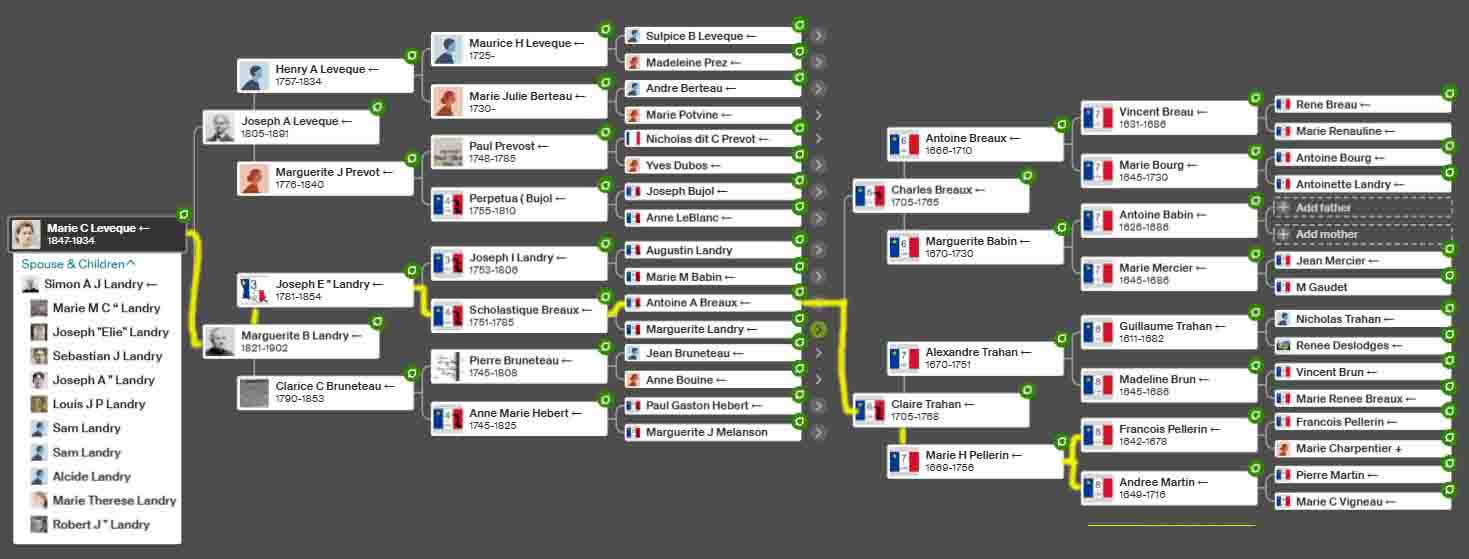
Francois Pellerin lived from 1636 to 1678.  Never heard of him?  I was only slightly familiar with his name in my tree until a few months ago.  I read a few stories about him that caught my attention.  It wasn’t anything that he had done, but something that was done to him.  Interesting stories sometimes pass down through a few generations and most of the time they die out.  Fortunately for us, there are still some legal records from over 350 years ago.  And they tell an interesting story about our Francois.

Francois was born around 1636 and married Andree Martin in 1665 in Port Royal, Acadie.  They were some of the early French inhabitants of that area.  In fact, Andree’s older brother Matthieu was reported to be the first child born of French heritage in Acadie.   In the 1671 Census, they were still living in Port Royal, and they had three young daughters – Huguette, Marie, and newborn Anne.  I descend from their second daughter Marie.

Shortly after this, Jacques Bourgeois – another of my ancestors – decided to create a new settlement in Acadie.  It wasn’t too far from Port Royal, but with the primitive mode of travel back then, it took more than a week to make a one-way journey.  It was called Beaubassin, and at first it was started with Jacques and several sons and sons-in-law.  Not much later on, they were joined by others, including our little Pellerin family.

A couple of years later, the family traveled back to Port Royal for a visit.  One of the people they visited was Andree’s younger sister Marie Martin Morin.  It was in one of the years that both of the sisters rested between having 25 children between them.  During this visit, the two sisters decided to go have a walk into town.  While there, they witnessed a disturbing sight.  A man was molesting a young girl on the street.  Andree was appalled and took it upon herself to do something about it. 

She demanded that the man stop.  While attempting to make him stop, the man lunged at her.  She must have been prepared for this possibility, because she was able to grab a large piece of wood and hit him over the head with it!  She hit him pretty hard, because it stopped him from attacking the girl or herself.  I love reading an account of one of my ancestors doing the right thing.  I think she felt she had done the right thing, too.  But she also worried a bit.  The man – his name was Jean Campagna – told Andree that she would live to regret the actions she had taken.  A not so veiled threat.

You can imagine the retelling of this story when they got home to their families or with their friends.  Marie might have said something like, “You should have seen when Andree smacked him on the head!  He didn’t know what hit him.  Le tonnerre ecrase!”  Though it would have all been in French.  I wonder if the threat was repeated in the retelling.  It had such an ominous tone.  And you know it has to have some importance since it was recounted at some point.  Otherwise we wouldn’t know about it.

The Pellerin family returned to Beaubassin without further incident.  Their life continued there with the arrival of three more daughters.  Francois may have been a little disheartened by this.  Homesteading in a new area was hard backbreaking work.  Some big strong sons were always helpful in those conditions.  They needed to dyke the land to get it into condition for growing crops.  That took time and with a growing family to feed, Francois felt pressure to do something about it.  He went out to find someone who could help him out with all of the hard work.  The important thing was to find someone strong and hard-working.  In a weird twist to this story, the man who fit that bill for him was none other than Jean Campagna.

You can imagine Andree’s outrage when she saw Francois bring that big brutish man into their home.  A home that included six young girls under the age of thirteen.  She must have thought he was mad.  Didn’t he remember that Campagna had threatened her?  Francois stood his ground and insisted that it was necessary for survival. That included having the man live in their home!  That’s what happened, but you can be sure that Andree watched him like a hawk and always knew where the closest big stick was!

Then Campagna had the audacity to tell Francois that he wanted to marry their 12-year-old daughter Huguette.  There was no way Andree was going to allow that to happen.  As Campagna went around claiming he was going to marry soon, Andree went about finding another alternative.  It didn’t take her long to make an arrangement with a man named Pierre Mercier.  Even though she made this announcement, Campagna told everyone in town that Huguette was promised to him.  Campagna had a bad reputation in the town, so I’m sure everyone believed Andree over him.  He was bad news all around.

Most of the settlers weren’t fond of his drinking and gambling behaviors.  Yet he had money to lend them – at outrageous interest rates.  He also acted like he knew all the best ways of farming and working on drainage issues in the marshy land they lived on.  He wasn’t the only threat to the area’s tranquility.  There was a running history of the English attacking the French in Acadie.  Sure, they were willing to trade for things that they needed from time to time, but some of them were just as willing to attack them and burn their homes when something went wrong.  And there was always one disease or another.

Around the late 1670s, there was an outbreak of something that claimed several lives.  It was probably smallpox.  That’s what was reported in Port Royal.  Somehow it made its way to Beaubassin.  It was a quick-acting disease.  A person could be working in the field at the beginning of the week and be dead by the weekend.  It sounds quite painful.  That’s what happened to Francois Pellerin.  He was working in the marsh with Jean Campagna.  They may have gotten into some type of disagreement where Campagna “breathed into Francois’ eye.”  Not long after that, Francois fell ill.

I’m sure Andree was worried about her husband and also didn’t want her children to fall ill as well.  Maybe she kept some distance between them and her husband.  This gave Campagna a way to get in and see Francois.  He took out a mysterious box and placed it at the feet of Francois.  When Francois saw it, he asked Campagna to remove it.  In response, Campagna said, “It’s good for grinding barley.”  Nobody knew what that meant.  Francois died later that day.

Andree was sure that witchcraft was involved.  She felt that the visit to Francois on that last day was to finish him off with a spell.  Andree’s sister Marie also claimed that Campagna had tried to kill a man in Port Royal.  There was also a suspicious death of a woman who had just received a gift of butter from Campagna.  Maybe he poisoned her?  Maybe he somehow passed on a deadly disease?  When Andree’s daughter Huguette died a short time later, she thought Campagna had something to do with that as well.  In another odd twist in the story, Andree commiserated with Pierre Mercier (Huguette’s fiancé) about these deaths. They became close and ended up getting married.

They continued to talk about the evil plotting of Campagna.  With these allegations, Campagna was imprisoned before being brought to trial in Quebec.  Pierre Mercier questioned him about his promise that Mercier would never marry Huguette.  Was that a threat?  He asked him about the phrase he said to Pellerin, “It’s good for grinding barley.”  Campagna’s reply was that it was a joke.  What kind of joke is that on someone’s sickbed?  Campagna denied any wrongdoing.

A lot of these accusations were made at the urging of Le Neuf, a French seigneur who was in charge of this area of Acadie.  He had a grudge against Campagna.  Campagna had given his wife that odd gift of butter while he was away.  He thought Campagna had tried to win her affections. Le Neuf also collected testimonies of several villagers about the actions of Campagna. It was enough to get Campagna sent to Quebec where he was imprisoned for curses and spells.

In 1685 there was a trial, but it didn’t last long.  French law required that there be concrete proof when making claims against someone.  There was evidence that people didn’t like him and some of them owed him money that they didn’t want to pay back.  There was no proof of witchcraft.  The results didn’t really matter.  If he had been found guilty, he would have been banished from Acadie.  He was essentially found innocent, yet he had the same punishment. 

Campagna was not allowed to return to Acadie.  At least Andree wouldn’t have to see his disgusting face ever again.  That must have been some comfort.  I hope so.

Marie Celeste Leveque’s tree with yellow trail back to Francois Pellerin and Andree Martin. Grandma Celeste was my grandfather Rob Landry’s mother.
A Revised Look at Samuel Phenice

Sometimes I have a difficult time coming up with a title for my post.  Just something that will tell people that it’s about someone they might be interested in.  I didn’t have difficulty deciding on a title or a photo for this week.  The photo is one that I’ve had for a while.  I’ve always thought that I would eventually use the photo for a post.  Of course I would!  It’s a photo of my great great grandfather and there aren’t many photos of him around.  But I never thought of what I would write about it, and now I can’t think of anything to say about it.  I guess I’ll just click on these keys and see what happens.

Edited version of photo of Samuel Phenice circa 1935.

The photo in question is this photo that I got from my Phenice cousin Mona several years ago.  I think it was in 2017.  It’s a photo of our common ancestor Samuel Charles Phenice.  But she is a great granddaughter of Samuel.  That’s because she descends from the youngest child of Samuel’s youngest child.  She’s not much older than I am, but she’s in the same generation as my mother.

Samuel’s youngest daughter was Emma Phenice.  Unlike her older brother Harry that I descend from, she stayed in the area that her parents had settled in.  Emma had a closer connection to her parents through the years, and her children got to know them well.  When Samuel grew to be elderly, he went to live with Emma and her family.

Harry, on the other hand, moved down to Louisiana and visited from time to time.  I really don’t know how often he visited.  I’ve seen a few photos through the years, but I don’t know if those were the only times he visited.  I probably don’t have all the photos that were taken at these visits with the parents.  My grandmother was Harry’s daughter Myrtle, and I don’t know if she ever visited.  Her younger sister Marguerite recounted that she only visited once and there are photos of that visit.  I think if my mom had visited, she would have remembered and talked about it.  She liked to talk about Samuel and Cathrine, but I don’t remember hearing that she had met either one.  Cathrine died before mom was born, so that didn’t happen for sure.

Emma’s family spent more time with him and consequently have more photos of him.  Fortunately for me, they have been willing to share some of those photos.  I’m hoping there are more that I haven’t seen.  I’m very good at wishful thinking!!  The image I have of the photo was of poor quality.  It was just a snapshot taken with a shadow across the image.  I’m not sure if the original photo is much better.  So, I decided to revise and enhance it.  

Sometimes enhancing a blurry photo has results that don’t look like the person.  I revised the enhanced version to try to get it to look like Samuel the best I can.  The results may make him look a little younger than the 90-year-old man at the estimated time of the photo.  It’s better than nothing.  Plus, I’m letting you know that it is a revised image.  That was hinted at in the title.  A person of the mind to reject revised photos might have just skipped right over this post.  I’m hoping that you that came along enjoyed the image of one of my progenitors.


The Patureau Siblings in 1953

Patureau siblings in Lafayette, Louisiana, in 1953 

I’ve posted two other photos from the same long ago day in June of 1953.  The first one I posted was a photo of my Mee Maw with her sisters that I found after the death of one of my dad’s cousins ten years ago.  That was just a few months before I started posting these weekly family history blogs.  Then cousin Sis gave me a copy of another photo from that 1953 event.  It was of Mee Maw with her siblings and some of her niblings, including her niece Sis.  I shared that photo five years ago.

I suppose that means that it is time for another photo from that event.  I just happen to have the perfect photo for that.  It was given to me by Wade, another cousin from the Patureau family.  The Patureau family in Louisiana started in 1840 when Pierre Patureau and Anne Rose Machet brought their children here from Riberac (near LaRoche-Chalais), France.  Their son Ferdinand reached the age of maturity in Louisiana and married a woman of Acadian descent.  Her name was Marie Emma Landry.  They had more than a dozen children, and my line comes from their son Vincent Maximilian Patureau.  I like to refer to him as Grampa Max.

Max grew up in Plaquemine, Louisiana, and when he was old enough, he married a Marie Landry of his own.  Mrs. Max Patureau had the given name of Marie Therese Landry.  They had more than a dozen children of their own, though only nine of them lived to adulthood.  The oldest was Marie Emma Patureau, who was born August 3, 1889.  She married Anthony Joseph Mouton in 1919.  Aunt Emma and Uncle Toby lived in Duson, Louisiana.  Next is Romuald Sylvester Patureau, who was born December 27, 1891.  He was married to Etta Mae Reese, though I don’t know when.  They were known as Uncle Rome and Mom Pat, though they didn’t have any children.  They lived in Baton Rouge and Alexandria.  Marie Lydwin is next and she was born November 28, 1893.  Aunt Win was never married and she lived in Plaquemine.  My grandmother was next.  She was born on August 6, 1895.  She was married to Robert Joseph Landry on November 12, 1921, in Lafayette.  They were known as Uncle Rob and Aunt Erie, though to me they were Pee Paw and Mee Maw.  They lived in Lake Charles.  My dad was Robert Joseph Landry, Jr.  He was known as Bob.

Following Erie was Frances Lorena, who was born October 10, 1896.  She married Samuel Sidney Cary in 1916.  Aunt Lorena and Uncle Sidney lived in Opelousas.  The next two were Zita Amelie and Marie Therese.  Aunt Zita was born November 29, 1897.  Bee (Marie Therese) was born on March 16, 1899.  She married Clarence George Schafer in 1933.  They had two daughters, and then Bee died in 1937. (Uncle Rome died the same year.)  Uncle Clarence then married Aunt Zita in 1940 and they reared the two girls together.  She is still referred to as Aunt Zita.  They all lived in Plaquemine.

The last two children that made it to adulthood were born in the 1900s.  Vincent Maximilian Patureau, Jr. was born November 4, 1901.  He married Effie Clements in 1936.  Uncle Vincent and Aunt Effie lived in Baton Rouge and Beaumont, Texas.  Lastly we have Sylvie Albine, who was born July 28, 1903.  She married John Walter Marionneaux in 1929.  Aunt Sylvia and Uncle Son lived in Plaquemine.

The siblings seemed pretty close.  That’s kind of obvious from the fact that they all came together for an event honoring their sister Emma when they were all in their 50s and 60s.  Some siblings don’t even talk to one another for periods of time.  An example is my maternal grandfather and his identical twin.  That seems very sad to me.  Since I’ve already given you the names of Mee Maw and her siblings, now let me identify them in the photo.  From left to right we have Win, Zita, Vincent, Emma, Lorena, Erie, and Sylvia.

Brother Hein Could Swim

I thought I would talk about a few events that happened about two hundred and thirty years ago in my Hine family.  I found some information a few years ago and thought that they might make an interesting story.  Now I’ve finally gotten around to doing it.  I’ll start by tracing my line back to the aquatically gifted ancestor of mine.  I’m Van and my mother was Betty Lou Bucklin Landry.  Her father was Fred Bucklin, who was the son of Addie May Hine Bucklin.  She’s the last one in my line to carry the Hine name.  Her father was George Henry Hine.  I thought I would share a photo of him, because he’s the one furthest back that has a photo.  You’ve probably seen the photo before.  It’s a favorite of mine.

George Hine circa 1900 in Louisiana.

George was the son of John Peter Hine.  John Peter’s father was Peter Hine.  Peter had the unfortunate situation that he became a father posthumously.  He died at the age of 24 on July 22, 1819.  His only child was John Peter, who was born on September 3, 1819.  Of all of my maternal ancestors that I am familiar with, Peter Hine had the shortest lifespan.  He was the youngest son of Johannes John Hein, who was an immigrant from Dillenberg, Germany.  The documents from the 1700s show his name spelled as Johannes or John Hein.  Only later generations adopted the Hine spelling that we use today.

John Hein arrived in Wachovia, NC.

Johannes was my 5x great grandfather.  He came to North America with his father Johannes Jacob Hein and his stepmother in 1753.  They originally settled in the Broad Bay, Maine, area.  They were part of a religious group called the Moravians.  The Heins then moved to Friedland, North Carolina, at some point.  That sets the story up for the few pages of information I found. On page 811 of “The Records of the Moravians in North Carolina” there is an entry that talks about some of the new members that have found their way to Wachovia around 1774.

Hein could swim on July 5, 1775.

John Hein is listed separately from his father and the rest of his family.  I don’t know if the others were there before or after him, but they were all at the same place later on.  On other pages they talk about the wagons coming into town with prospective new citizens.  There were less than 300 people in the town at that point.  There is talk about building roads and bridges to make life more convenient and appealing to people.  Then one night they must have had a big rainfall.  On the morning of July 5 (1775), they woke up to higher water than they had ever seen in the area.

It says something about the mill sending for help.  I’m sure they didn’t send a text!    Somehow, they got a message, and they needed to cross the creek.  There had been discussion about needing a bridge across Muddy Creek and I’m not sure this is the same place.  But they needed to cross the water and all they had was a shabby canoe.  The older, more sensible people probably didn’t want them to use such an unsteady vessel, but the young men insisted.  One of them was our John Hein.  He went along with Kremser and Schaub.  They ran into a strong current, which caused the canoe to leak and then sink.  Fortunately for all involved, John Hein knew how to swim.  From the look of it, he saved the other two young men’s lives.  I think that is pretty commendable.  I like seeing stories like that about my ancestors.

1777 – Banns to be published

The last thing I wanted to show was from July 17, 1777.  John was almost thirty years old, so it was time for him to start a family of his own.  The girl that caught his eye was Juliana Catharina Schneider.  She was a few years younger than him, and she had been born in Broad Bay, Maine.  She was the daughter of another German immigrant Melchior Schneider.  He and his wife Jacobina Doerflinger were married in 1742 on the ship carrying them across the Atlantic Ocean.

John and Juliana were not so dramatic.  John went to Br. Graff with his future father-in-law Michael (aka Melchior) Schneider to request the marriage of John and Juliana.  They wished the Banns of marriage to be published, which was promised to them.  The young couple was married August 19, 1777.

My Dad and His Siblings in 1975

I like to be able to find photos from 50 years ago for some type of family event.  It’s a good even number.  I like bigger numbers like 60, 70, or 80.  A photo from exactly 100 years ago is not easy to find, so when I find one it is really special.  I hope there isn’t one for today, because I am not aware of it.  It’s so easy to overlook those types of anniversaries when there is so much history to look over.  That’s why I decided on the 50-year anniversary of the Fourth of July Celebration from 1975 for my dad’s family.

The Landry family of Lake Charles, Louisiana, on July 4, 1975.

The Landry family get togethers were always so enjoyable.  There were so many people, and the numbers seemed to grow every year.  Cousins were marrying and having children everywhere you turned.  There were usually photos of large groups, and I have one from 1975.  It’s one of my least-favorite photos of myself.  I thought about being brave and posting it but decided against it.  It was really just a matter of opting for this one instead.

Because even though there were always large family photos, my dad and his siblings had a tradition of taking a photo of just the eight of them.  They were the children of Robert Joseph “Rob” Landry, Sr. and Germaine Erie Patureau Landry.  They were better known as Mama and Papa to these eight, and they were known as Mee Maw and Pee Paw to all of us grandchildren.

In 1975, neither Mee Maw nor Pee Paw were alive.  Pee Paw died in 1957 at the age of 64.  I recently reached the age he was at his death.  It will take a while longer for me to pass up Mee Maw.  She died in 1973 just a month short of her 79th birthday.  This photo was just two years after her death.  The siblings must have decided to keep the family get togethers going after their mother’s passing.  I wonder if they discussed that at all, or it was just what everyone wanted.  Whatever it was, it sure did endure.  Those siblings continued getting the family together for about 40 years.  Not without the help of their children, of course.  It has stopped, because one by one they have all passed away.  This is the first July 4th without any of those Landry siblings.

The photo was taken at The First’s home.  That would be the home of cousin Shirley and her husband Dudley.  She is my godmother.  We had the Fourth of July celebration there for many years.  I don’t know when it started, and I don’t know when it stopped.  I also don’t remember what the family did for the Fourth when Mee Maw was still alive.  But I know we got together in 1975, because I have this photo to prove it!  Photos are such good assistance to our memory.  Thankfully, I can still remember the name of everyone in the photo.  I thought I would share that with you. 

I’ll start on the left with Marie in her so very patriotic red, white, and blue blouse.  It’s the main thing that stood out when I restored the colors to the photo.  That and the green grass.  Marie was the oldest sister and she’s standing next to the youngest sister Frances.  Frances is standing somewhat behind Germaine, who is in a mint green outfit.  Not as patriotic as her big sister but still looking spiffy.  Next is Hubert, the father of The First.  To the right of him is my dad Bob.  The family called him Bobbie, but many of his friends called him Pluto.  Next to him is Wana.  She almost got the patriotic colors correct, she’s just missing a bit of red.  You can barely see A. J. next to her, because Johnny is in front of him.  He may have got in that habit when they were young.  A. J. was the oldest boy, and Johnny – the youngest – could have stood in front of him without blocking him at some point.  It was not the case in 1975.

I hope you all have a wonderful Fourth with friends, family, and/or loved ones.

The Keys of Chipping Ongar

The most recent immigrant in my family tree is my maternal grandmother’s mother Daisy Henrietta Martha Keys Phenice.  She came to America with her family in July of 1887 from London, England.  They settled in southern Louisiana, and she and her siblings went on to marry and have children, grandchildren, and so on.  They are all over the place now.  I’m not going to explore all of those places now.  I’m going to look back further in time to see the family of Daisy’s father Henry Keys.  He died before the family moved from England.  It was his brave wife who brought their five children across an ocean to start a new life.  I’ve written more about her since she was the one that made it to Louisiana.  I’ve even taken a selfie with her grave.

Henry Keys circa 1880.

I thought I’d start the story with Henry’s parents.  They’re the ones that had all of those Keys children in Chipping Ongar.  Chipping Ongar is a market town in the Epping Forest district, which is in the county of Essex in England.  It’s where George Keys from Wethersfield and Elizabeth Crouchman from Moreton (both places are in Essex County) set up a home and started a family.  They were married in Chipping Ongar on October 21, 1807, at the St. Martin of Tours Church of England.

There are no photos of George and Elizabeth that I know of.  I have said that about other great, great, great grandparents of mine and have later found them.  George and Elizabeth lived until the 1860s, so it is a possibility that there are photos of them.  We can only hope.  But I do have a few details about the way they looked.  George is said to have tan hair, blue eyes, and very fair skin.  I’ve never heard anyone use the color tan to describe hair, but I would assume it would be light brown.  I’m sure my sister Karen would have agreed with me when I say that ‘tan’ is a better description of light brown hair than ‘mousy brown.’

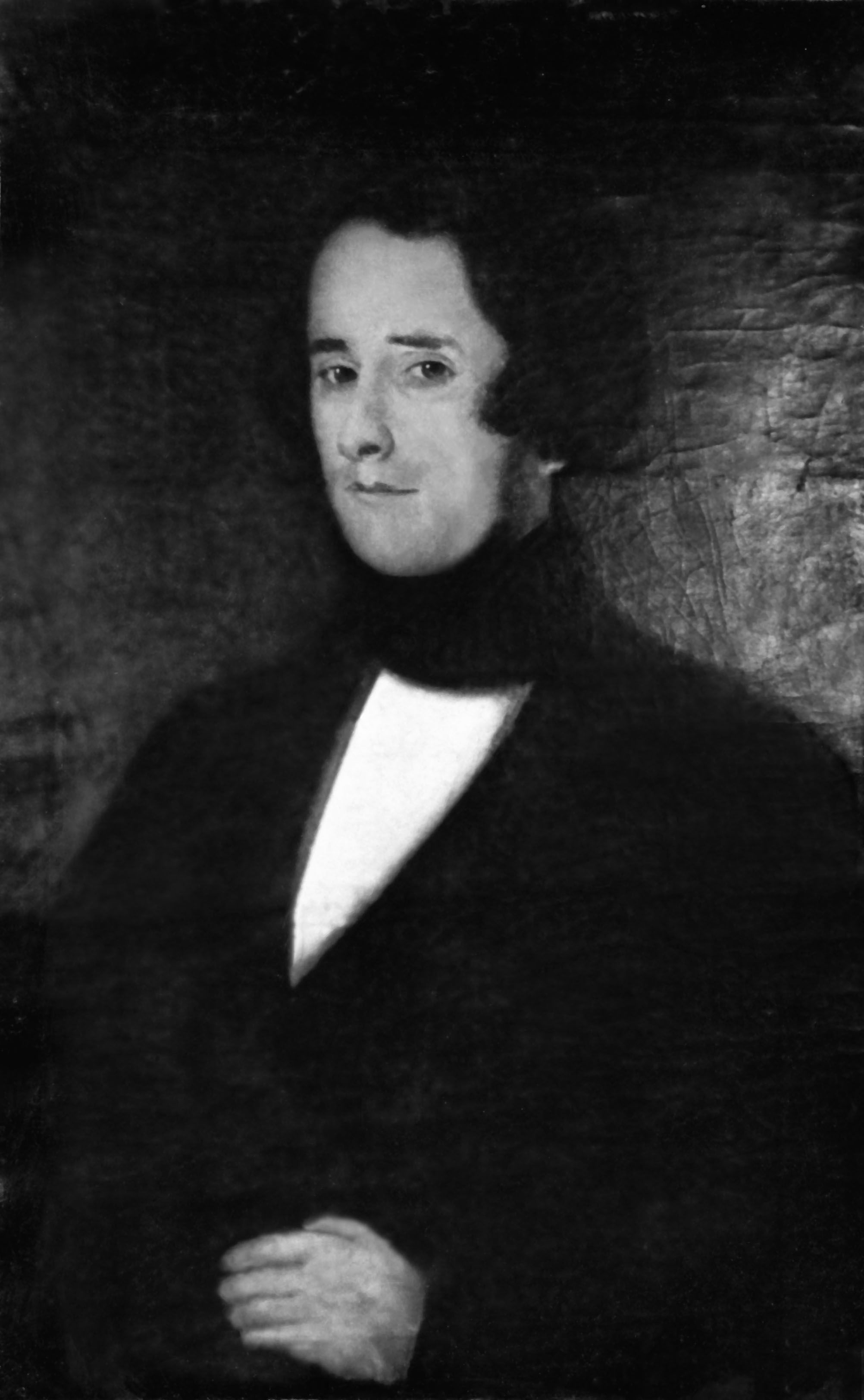
Elizabeth, on the other hand, had black hair, blue eyes, and very fair skin.  They were English, so I’m sure they did have fair skin.  At least it wasn’t described as pale or pasty.  From the photo/painting of their son Henry, it looks like he also has fair skin.  His hair looks very dark, so he probably got that from his mother.  No mousy brown hair for him!  If both of his parents had blue eyes, it’s likely that he had blue or light eyes as well.  That’s always difficult to tell from old photos unless they are distinctly light in the photo.

George and Elizabeth’s first child was born in 1809.  Eliza Keys would later marry John Reading, and they stayed in England.  George James Keys was born in 1812.  He married Elizabeth Jane Rose, and they immigrated to Ontario, Canada.  I’m glad they moved away, because this George and Elizabeth (Rose) Keys would easily be confused with his parents if they stayed in the same area.  Elizabeth Keys was born in 1814.  She married George Little, and they immigrated to Victoria, Australia.  Amelia Keys was born in 1816.  Nothing more is known about her.  Jane Keys was born in 1818.  She married George Bedford, and they stayed in England.

The next two children born to George and Elizabeth were James and Henry Keys.  They were born in 1822, and they were identical twins.  We all know that Henry married Martha Ann Cook and their children came to America.  James was never married and had no children.  The last child of George and Elizabeth was William Keys, who was born in 1824.  I’ve written about him before because he was married to Martha Cook’s younger sister Henrietta.  They stayed in England.  A few of their children immigrated to the U. S.  

My main impetus for choosing the topic of this post was a new DNA match that showed up this week.  The matching DNA was attributed to our common ancestors.  Ancestry showed that we had common ancestors of George Keys and Elizabeth Crouchman.  But they were wrong.  I definitely have ancestors by the name of George Keys and Elizabeth Crouchman, and so does the DNA match.  But it is not the same George Keys and Elizabeth Crouchman!  And they lived in the same area.

I had seen this before.  It was very confusing at first until I realized that there were two couples with the same name from the same area.  With the help of the records from my mom’s cousin Edith Keys Segraves, and with input from more distant cousins still in England, we were able to figure it out.  In case you didn’t know, the names George and Elizabeth were very common names in England at that time.  It had to do with royalty or something.  It seems like every generation of those English families repeated the names.  That’s how it ended up with cousins with the same names.

In this situation, our George Keys, who was born in 1780, had a nephew with the name of George Keys born in 1812.  Our Elizabeth Crouchman, who was born in 1781, had a first cousin by the name of John Griffith Crouchman.  His first daughter was born in 1810, and she was named Elizabeth.  And sure enough, George (1812) Keys married Elizabeth (1810) Crouchman.  And to make things even more confusing, let’s look at the names of their first few children.  As you’ve seen from our George and Elizabeth, their first three children were Eliza, George (who married an Elizabeth), and Elizabeth (who married a George).  Then George (1812) and Elizabeth (1810) had children by the names of George (married an Anne – had a son named Henry) and Elizabeth (who married a George).  Way too many common names!

So those of you who are related to me through this couple, remember that you come from the original George Keys and Elizabeth Crouchman, not from the copycats!

1 3 4 5 6 7 58